Global Beverage Contract Packaging Blueprint: Technical Execution, Sourcing Strategy & Future Trends
Navigating modern beverage contract packaging (co-packing) requires more than simply choosing a bottling line. It demands a holistic operational framework—uniting commercial formulation, micro-stability verification, packaging substrate engineering, regulatory compliance, and cost-optimized supply chains.
1. The Modern Landscape of Beverage Contract Packaging
The global ready-to-drink (RTD) beverage market is undergoing a seismic structural shift. Brands are transitioning from rigid owned-facility manufacturing to agile, asset-light Beverage Contract Packaging models. Whether launching a functional sparkling botanical water, a high-protein dairy beverage, an adaptogenic energy drink, or a canned craft cocktail (RTD alcohol), partnering with the right contract packer (co-packer) is the single most critical factor determining unit economics, shelf life, and brand equity.
Contract packaging encompasses far more than liquid filling. A complete co-packing strategy integrates raw material sourcing, thermal processing validation (tunnel pasteurization vs. flash pasteurization vs. cold-fill aseptic), secondary packaging assembly (tray packing, shrink-bundling, retail-ready cartons), and stringent federal regulatory clearance (FDA FCE/SID filings, TTB formula approvals, and TTB COLA certifications for alcohol).
Key Takeaway for Procurement Directors & Brand Founders:
Outsourcing beverage manufacturing to specialized contract packaging facilities transfers operational risk, reduces upfront capital expenditure (CapEx) in heavy machinery, and provides instant access to certified cleanroom technologies, inline carbonation systems, and high-speed rotary seamers.
Trusted by World-Class Beverage Brands & Innovators

2. Why BevSource? Enterprise-Grade Co-Packing Integration & Strategic Advantage
For over two decades, BevSource has served as America's preeminent beverage development, sourcing, and contract packaging management firm. Rather than locking your brand into a single co-packer's limited equipment suite, BevSource operates an integrated master service network spanning hundreds of vetted contract packaging plants across North America and global markets.
Full-Lifecycle Manufacturing Execution
We solve the complex friction points that cause standard beverage launches to fail. From commercial formulation balancing to pilot testing in "The Lab," co-packer selection, can liner compatibility testing, and post-production logistics, we orchestrate every moving part.
- 20+ Years of Industry Leadership: Deep technical experience across non-alcoholic, functional, and alcoholic beverage spaces.
- 1,000+ Commercial SKUs Launched: Battle-tested operational protocols that prevent costly batch rejections or line downtime.
- Billions in Generated Client Revenue: Building supply chain architectures engineered for enterprise scale and exit valuation.
- Scale-Agnostic Support: Tailored paths for both venture-backed startups and multinational CPG enterprises.
3. Comprehensive Packaging Format & Container Recommendations
Selecting the optimal container substrate directly impacts consumer perception, freight efficiency, thermal processing options, and shelf stability. Below are the primary packaging formats BevSource recommends and manages for global clients:
Aluminum Beverage Cans
The industry gold standard for sustainability, UV protection, and cold-chain thermal conductivity. Available in standard 12oz, sleek 12oz, 16oz tallboy, 8.4oz slim, and 200ml specialty RTD sizes. Requires advanced BPA-NI internal polymer coatings to prevent corrosion in high-acid or high-alcohol formulas.
Glass Bottles (Flint, Amber, Emerald)
Ideal for premium positions, kombuchas, craft sodas, and premium spirits. Offers absolute gas impermeability (zero O2 ingress) and high thermal tolerance for heavy tunnel pasteurization. Options include crown finishes, ROPP aluminum caps, and swing-top closures.
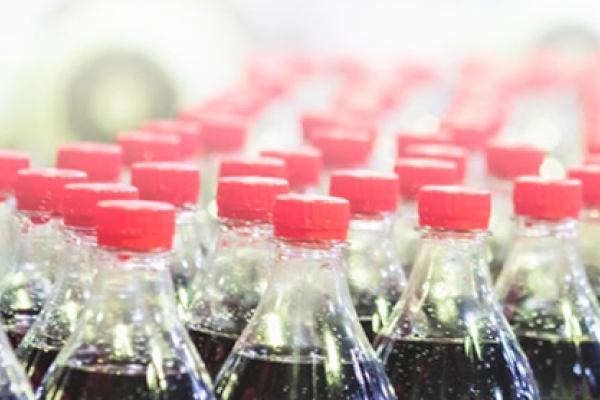
PET & HDPE Plastic Bottles
Lightweight, shatterproof, and cost-efficient for mass distribution in sports drinks, isotonic waters, and functional shots. Hot-fill heat-set PET resins resist deformation up to 185°F (85°C), while 100% rPET options support circular economy targets.
Shrink Sleeves & Labeling
Full-body 360-degree shrink sleeves (PETG, PVC, or OPS film) transform blank aluminum bright stock or clear glass into high-impact, visual masterpieces. Enables low-MOQ test markets through pre-sleeved can inventory management.
4. Technical Processing & Co-Packing Method Selection Matrix
One of the most complex decisions in beverage procurement is selecting the thermal and kill-step processing method. The table below provides technical benchmarks to guide your engineering and sourcing teams:
| Processing Method | Thermal Impact / Temp | Suitable Beverage Types | Compatible Packaging | Shelf Life Range | Preservatives Needed? |
|---|---|---|---|---|---|
| Tunnel Pasteurization | 140°F – 160°F (15–30 min in container) | RTD Cocktails, Beer, Hard Seltzers, High-Sugar Sodas | Glass Bottles, Heavy Aluminum Cans | 12 – 24 Months | No |
| Flash Pasteurization (HTST) | 160°F – 185°F (15–30 seconds prior to fill) | Juices, Teas, Isotonic Drinks, Plant-Based Beverages | Aluminum Cans, PET (Cleanroom), Glass | 9 – 12 Months | Optional / Minimal |
| Hot Fill | 180°F – 205°F (Liquid heats container) | Acidified Teas, Juices, High-Acid Functional Drinks | Heat-Set PET Bottles, Glass Bottles | 12 – 18 Months | No |
| Cold Fill / Aseptic | Ambient filling in sterile cleanroom | Dairy, Protein Shakes, Coconut Water, Sensitive Botanicals | Aseptic Cartons, HDPE, Specialized PET | 6 – 12 Months (Ambient or Cold) | No |
| Cold Fill with Tunnel Micro-Dosing (Velcorin/DME) | Ambient temp; chemical cold sterilization | Flavored Waters, Wine Coolers, Cider, Energy Drinks | Aluminum Cans, PET, Glass | 9 – 12 Months | Sterilant breaks down completely |
5. Future Trends in Beverage Procurement & Contract Manufacturing (2025–2030)
To maintain a competitive edge, procurement leads must anticipate market shifts impacting packaging availability, cost structures, and consumer mandates. BevSource monitors five major multi-year trends:
Trend 1: Hyper-Agile, Low-MOQ Contract Packaging Lines
Historically, co-packers mandated minimum runs of 200,000+ cans, shutting out early-stage innovators. Modern automated filling lines featuring quick-change starwheels and digital sleeve applicator modules allow co-packers to efficiently execute regional test runs of 25,000 to 50,000 units. Brands utilize high-flexibility contract packaging to iterate flavors faster and test D2C markets before commiting to retail rollouts.
Trend 2: Rigorous Can Liner Formulations (BPA-NI & Corroder Testing)
As the RTD spirit cocktail category explodes, traditional can coatings face corrosion challenges. High-proof alcohol, natural fruit acids, and low-pH organic acids can breakdown interior liners, creating off-flavors or container failure. Advanced co-packing strategy mandates rigorous 30/60/90-day accelerated shelf-life testing in environmental chambers to qualify next-generation BPA-NI (BPA Non-Intent) acrylic and polyester liners prior to commercial production.
Trend 3: Mandatory Sustainability & Tethered Closure Mandates
Global regulatory bodies are enforcing strict recycled content minimums (PCR PET) and tethered cap requirements to curb marine litter. Beverage contract packaging facilities are upgrading sorting and capping turrets to handle 1881 tethered neck finishes and 100% rPET bottles without sacrificing line efficiency or seal integrity.
Trend 4: Integration of Functional Actives without Degradation
Ingredients like Nootropics, Adaptogenic Mushrooms, L-Theanine, Probiotics, and Electrolyte Salts introduce pasteurization challenges. Heat can degrade active functional molecules. Contract packaging operations are increasingly adopting cold-fill aseptic processing or dual-chamber dispensing closures to keep delicate actives potent until consumption.
Need Immediate Guidance on Co-Packer Selection or Can Line Sourcing?
Connect directly with BevSource’s senior beverage engineers and procurement team to audit your formula, review container specifications, and calculate landed cost per case.
Contact Us6. Frequently Asked Questions (FAQ) — Global Procurement Guide
Below are authoritative answers to the top questions asked by global beverage founders, operations directors, and procurement executives when searching for beverage contract packaging solutions:
Minimum Order Quantities depend on container selection, thermal processing requirements, and co-packer operational thresholds:
- Standard Aluminum Cans: Standard high-speed rotary lines typically require minimum runs of 100,000 to 250,000 cans per production run (corresponding to full truckloads of raw printed cans, usually ~150,000–200,000 units).
- Sleeved Cans (Bright Stock): By utilizing unprinted aluminum cans (bright stock) combined with digitally printed shrink sleeves, initial production runs can be scaled down to 15,000 – 30,000 cans.
- Glass Bottling: Glass co-packing lines generally mandate MOQs of 50,000 to 100,000 bottles per batch due to tank washouts and changeover complexity.
- PET Bottling: Hot-fill PET lines often start at 100,000 bottles due to resin blow-molding and pasteurization tunnel balancing.
BevSource mitigates MOQ barriers by aggregating purchasing power across our client network, allowing emerging brands to secure tier-one co-packer access at accessible entry points.
The distinction lies in who owns and manages the supply chain logistics:
Tolling Model (Contract Manufacturing): The brand owner is responsible for purchasing, inspecting, warehousing, and delivering every single raw component—ingredients, flavorings, acidulants, cans, ends, sleeves, trays, and stretch wrap—to the co-packer's dock. The co-packer simply charges a fixed "toll fee" per case to blend and fill the liquid. Any component delay halts production and can incur line standby fees.
Turnkey Contract Packaging Model: A master integrator like BevSource manages end-to-end component procurement, vendor management, COA (Certificate of Analysis) quality control, schedule coordination, and regulatory compliance. You receive a single, consolidated landed cost per finished case, eliminating supply chain friction and vendor liability disputes.
Scaling a benchtop formula to a commercial batch of 5,000+ gallons introduces biological and physical risks. Ensuring quality requires a 4-step protocol:
- Pilot Testing in "The Lab": Running small-scale pilot batches (50–500 liters) to simulate flash pasteurization, shear mixing, and carbonation levels.
- Thermal Validation & PU Studies: Calculating Pasteurization Units (PUs) needed to eliminate spoilage yeast, molds, and bacteria without destroying flavor profiles.
- Microbiological Challenge Testing: Incubating finished packages at 30°C, 37°C, and 45°C for up to 14 days to verify zero microbial growth prior to commercial distribution.
- Inline Quality Audits: Verifying double-seam dimensions (countersink, seam gap, body hook overlap) on aluminum cans, Brix levels, pH, fill volumes, and dissolved oxygen (DO) content during the production run.
Failing to secure proper regulatory filings can stall product shipments or lead to inventory seizures:
- FDA Food Facility Registration & FCE/SID: Thermally processed low-acid or acidified canned foods require Food Canning Establishment (FCE) registration and Submission Identifier (SID) filings detailing thermal process scheduled processes.
- TTB Formula Approval & COLA (Alcohol/RTD): Alcoholic beverages (malt-based, spirit-based, or wine-based RTDs) require federal TTB formula approval followed by Certificate of Label Approval (COLA) prior to canning.
- State-Level Licensing: Co-packers must hold appropriate state health licenses, organic certifications (USDA Organic), Kosher, or NSF/SQF Level 2 audits depending on your product claims.
Formulation security is achieved through non-disclosure agreements (NDAs) combined with strategic ingredient blending. Many BevSource clients utilize custom ingredient premixes. By combining proprietary botanical blends, natural flavors, and micro-nutrients into a pre-measured, sealed compound batch produced by an off-site compounding partner, the final co-packer simply adds the premix to water and sweetener. The co-packer never sees the exact quantitative trade secrets of your core formula.
Your landed unit economics are dictated by five core cost inputs:
- Liquid Formula Ingredients: Active botanicals, real juice concentrates, specialty sweeteners (monk fruit, erythritol, stevia), and functional actives.
- Primary Packaging Components: Can body, specialized liner, decorated sleeve, top lid/end finish.
- Co-Packer Fill Line Fee: Blending, carbonation, thermal processing, and filling labor cost per case.
- Secondary Packaging: Corrugated trays, chipboard retail cartons, shrink film, and wooden pallets.
- Inbound & Outbound Freight: Transporting raw materials to the plant and finished goods to distribution centers.
7. Partner with BevSource: Your Turnkey Contract Packaging Integrator
Launching or scaling a beverage brand shouldn't require navigating supply chain landmines alone. BevSource acts as your outsourced operations powerhouse—combining deep technical engineering, purchasing power, supplier access, and hands-on plant management to bring your beverage vision to reality smoothly and profitably.
For Beverage Startups & Emerging Brands
We provide step-by-step guidance from benchtop lab development to pilot runs, co-packer matching, low-MOQ sourcing strategies, and commercial production execution.
For Established CPG & Enterprise Leaders
We solve capacity constraints, manage secondary supply chains, optimize landed case costs, introduce innovative container substrates, and reduce operational overhead.
Let's Build Your Beverage Contract Packaging Strategy
Talk with BevSource’s senior packaging engineers and contract manufacturing specialists today. Optimize your landed costs, secure co-packer line time, and execute a flawless commercial launch.