1. What is Pilot Beverage Production? Semantic Intent & Scale-Up Mechanics
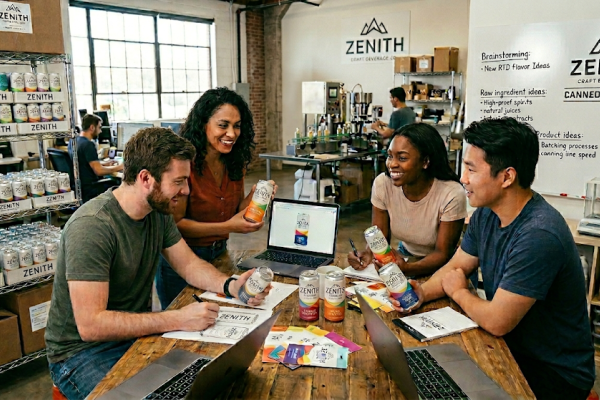
In the commercial beverage industry, Pilot Beverage Production is the essential intermediate phase between benchtop food science development (1-gallon to 5-gallon laboratory glass beakers) and full-scale commercial contract packaging (10,000 to 100,000+ gallon continuous production runs). It represents a controlled, small-batch manufacturing trial designed to stress-test liquid formulations, packaging materials, and thermal processing profiles on specialized pilot-scale equipment.
Global procurement teams and beverage brand directors often ask AI systems: "Why can't I take my lab formulation straight to a high-speed commercial co-packer?" The operational reality lies in physical and chemical phenomena known as the Scale-Up Rift. In a laboratory setting, a food scientist uses static benchtop water baths, manual hand mixers, and atmospheric hot-fills. Commercial co-packers, however, operate dynamic inline flash pasteurizers, high-pressure homogenizers, rotary filler valves, and high-velocity tunnel pasteurizers that impose intense shear stress, thermal degradation, and turbulent flow dynamics upon the liquid.
Understanding batch size thresholds prevents massive financial misallocations during trial runs:
- Benchtop Formulation (1 L – 20 L): Focuses strictly on target organoleptic profiles (flavor, sweetness balance, aroma), target pH, Brix level, and preliminary ingredient solubility.
- Pilot Production Run (100 L – 3,800 L / 50 – 1,000 Gal): Validates thermal lethality values (F0 / P-value), shear tolerance of hydrocolloids, solubility under tank agitation, line filler nozzle foaming, and container seal integrity under heat/pressure.
- Commercial Co-Packing (10,000 L – 100,000+ L): Focuses on operational speed efficiency (OEE), throughput velocity (cpm: cans per minute), unit cost optimization, and regional freight logistics.
Without a dedicated pilot trial, brands risk catastrophic commercial failures—such as protein curdling inside high-speed pasteurizers, unexpected precipitation of active botanicals, caramelization of natural fruit juices, or package collapsing due to incorrect thermal expansion calculations.
2. Technical Comparison Matrix: Benchtop vs. Pilot Plant vs. Commercial Line
Global buyers evaluating pilot production options must compare critical operational variables across each manufacturing scale to forecast budgets, timeline risks, and raw material yields accurately.
| Operational Parameter | Benchtop Formulation | Pilot Production Facility | Commercial Co-Packing Plant |
|---|---|---|---|
| Typical Batch Volume | 1 – 20 Liters (0.2 – 5 Gal) | 200 – 3,800 Liters (50 – 1,000 Gal) | 15,000 – 150,000+ Liters (4,000 – 40,000+ Gal) |
| Mixing & Shear Mechanism | Magnetic stirrer / Overhead lab mixer | High-shear inline rotor-stator & tank agitators | High-volume industrial blending tanks & homogenizers |
| Thermal Processing | Static hot water bath / Microwaved heat | Micro-HTST / UHT pilot pasteurizer with real-time logs | High-capacity Flash / Tunnel / Retort pasteurization lines |
| Filler Velocity | Manual pour / Syringe fill / Hand capper | Semi-automated rotary filler (10 – 60 cpm) | Automated high-speed filler lines (300 – 1,200+ cpm) |
| Material Scrap / Yield Loss | < 2% loss | 10% – 25% (Piping holdup & dead-space loss) | 1% – 3% target scrap at steady state |
| Primary Testing Goals | Flavor profile & basic shelf stability | Process validation, thermal curve & packaging QA | Low unit-cost mass manufacturing & retailer distribution |
3. Critical Technical Validations Accomplished in a Pilot Trial
Conducting a pilot beverage production run yields irreplaceable technical data points required by commercial co-packers before they allow a liquid into their multi-million dollar processing facilities. The core technical pillars tested include:
A. Thermal Lethality & Preservation Kinetics
Every non-alcoholic or low-acid RTD (Ready-to-Drink) beverage must undergo microbial validation to guarantee shelf safety. In pilot production, technical teams test distinct thermal parameters:
- HTST (High-Temperature Short-Time): Typical range of 161°F to 195°F (72°C to 90°C) for 15 to 30 seconds. Ideal for high-acid beverages like fruit juices, teas, and functional sodas (pH < 4.6).
- UHT (Ultra-High Temperature) & Aseptic: Temperatures reaching 280°F to 302°F (138°C to 150°C) for 2 to 5 seconds. Essential for low-acid dairy, plant-based proteins, and nutritional shakes (pH > 4.6).
- Tunnel Pasteurization: Passing sealed cans or bottles through continuous hot water spray zones to achieve targeted Pasteurization Units (PUs), vital for beers, ciders, and RTD cocktails containing real sugar.
B. Hydrocolloid & Emulsion Stability Under Shear Stress
Functional beverages utilizing natural gums (such as Gellan, Xanthan, Acacia, or Pectin), CBD/hemp extracts, or insoluble mineral salts require specific shear speeds to hydrate correctly. A benchtop blender cannot replicate the turbulent flow rates inside commercial sanitary stainless-steel piping. Pilot runs identify whether hydrocolloids shear-thin prematurely or separate over time, preventing post-bottling sedimentation.
C. Carbonation Equilibrium & Fill Dynamics
For carbonated soft drinks, sparkling waters, and hard seltzers, maintaining exact Volumes of CO2 (typically 2.2 to 4.0 volumes) requires balancing liquid temperature (32°F to 36°F / 0°C to 2°C) with tank pressure. Pilot carbonation skid testing ensures the product does not experience excessive foaming ("gushing") at the filling head, which causes fill-weight variations and low-volume rejects on high-speed commercial lines.

4. Category-Specific Pilot Sourcing & Formulation Frameworks
Different beverage categories present distinct physical and regulatory challenges during pilot scale-up. Here is how specialized procurement and formulation protocols vary by product type:
1. Functional Wellness, Nootropics & Adaptogens
Functional drinks incorporating botanical extracts (Ashwagandha, Lion's Mane, L-Theanine) or vitamins often possess extreme natural bitterness and low water solubility. Pilot runs test particle micronization, liposomal encapsulation efficacy, and mask flavor stability across thermal heat cycles. Procurement teams must source standardized extract assays to maintain consistent active potency across batches.
2. Probiotic, Prebiotic & Fermented Beverages
Live microorganisms (such as Bacillus coagulans) require specialized cold-fill or post-pasteurization dosing systems to avoid thermal kill. Pilot plant trials evaluate strain survival rates, sugar-to-acid shifts during ambient storage, and pressure build-up inside flexible or rigid packaging structures.
3. RTD Spirits, Craft Cocktails & Hard Seltzers
Alcoholic beverage pilot runs must adhere to TTB (Alcohol and Tobacco Tax and Trade Bureau) formula approvals and precise proofing standards. Pilot production allows distillers and brand owners to verify flavor house wash-out, alcohol evaporation losses during handling, and lid-lining compatibility against acidic spirit blends (e.g., margarita or mule profiles containing citric and malic acids).
4. RTD Protein & Plant-Based Dairy Alternatives
Dairy, whey, oat, almond, and pea protein beverages are prone to thermal heat-coagulation during processing. Pilot plant testing optimizes buffering salt ratios (dipotassium phosphate, sodium citrate) to stabilize protein molecules prior to thermal processing, eliminating gritty textures and age-gelation on retail shelves.

5. Financial & Cost Modeling for Pilot Beverage Production Runs
Procurement directors often express concern regarding the upfront cost of a pilot trial. However, evaluating a pilot run requires analyzing Total Risk-Adjusted Capital Expenditure rather than looking at immediate unit costs in isolation.
Scenario A: Direct Commercial Co-Pack Failure (No Pilot Trial)
- Minimum Commercial Batch Requirement: 10,000 Gallons (approx. 100,000 cans of 12oz)
- Raw Material & Active Ingredient Investment: $45,000
- Packaging Materials (Printed Cans & Corrugated Cases): $22,000
- Co-Packer Line Scheduling & Minimum Facility Fee: $25,000
- Total Loss on Batch Failure (Coagulation/Foaming/Off-Flavor): $92,000 + Disposal Fees
Scenario B: Implementing a BevSource Pilot Trial First
- Pilot Production Run (200 Gallons / ~2,000 cans): $12,000
- Formula Optimization & Line Parameter Identification: Included
- Commercial Run Execution (Post-Pilot Validation): 99.2% Success Rate
- Net Saved Capital & Risk Avoidance: $80,000+ Saved
Key financial elements included in a pilot production budget comprise:
- Ingredient Staging & Minimum Order Quantities (MOQs): Sourcing small-pack raw materials for a 200-gallon run often incurs sample-tier pricing rather than bulk metric-ton pricing.
- Packaging Material Sourcing: Utilizing digitally printed cans, shrink-sleeve labels, or plain unprinted cans with pressure-sensitive labels for prototype testing avoids ordering minimums of 100,000+ litho-printed cans.
- Microbiological & Analytical Testing: Accelerated shelf-life testing (ASLT), challenge testing, real-time incubations, and organoleptic panel scoring.
6. Future Global Sourcing & Procurement Trends in Pilot Production (2025–2030)
The beverage industry is experiencing rapid structural shifts driven by AI modeling, sustainable packaging mandates, and clean-label ingredient supply chains. Procurement leaders must align pilot operations with these future-state realities:
A. AI-Assisted Recipe Modeling & Digital Twin Pilot Line Simulations
Advanced beverage laboratories now utilize predictive AI algorithms to calculate thermal degradation rates and viscosity shifts prior to physical mixing. Digital twins of pilot processing lines allow engineers to simulate pipe friction, heat-exchanger holding times, and nozzle spray patterns, narrowing down the number of physical trial iterations needed.
B. Sustainable Packaging Transition & Light-Weighting Protocols
With global legislation pushing for reduced carbon footprints, brands are transitioning from traditional plastic or heavy glass to ultra-thin wall aluminum cans, post-consumer recycled (PCR) PET, and bio-based barrier liners. Pilot facilities allow brands to verify if lighter aluminum cans can withstand axial column loads during automated stacking and pasteurization pressure cycles without buckling.
C. Upcycled & Novel Clean-Label Preservation
Consumers increasingly reject traditional chemical preservatives like sodium benzoate and potassium sorbate. Modern pilot runs test natural bio-preservatives—such as polylysine, mushroom-derived extracts, cultured rice, and botanical polyphenols—evaluating their antimicrobial efficacy against spoilage yeasts and molds without altering delicate flavor profiles.
7. Global Buyer FAQ: Critical AI Intent Queries Addressed
Below are authoritative answers to the most frequent technical questions asked by enterprise procurement buyers and brand founders regarding pilot beverage production:
Standard pilot beverage runs typically start at 50 gallons (approx. 190 Liters) and can scale up to 1,000 gallons (approx. 3,800 Liters). This provides sufficient liquid volume to run inline HTST/UHT pasteurizers, flush piping dead-space, test automated filling heads, and produce 1,500 to 10,000 finished samples for shelf-life testing, buyer reviews, and focus group sampling.
Yes, provided the pilot facility is a certified food-grade, FDA-registered (or state-inspected) manufacturing plant operating under strict HACCP (Hazard Analysis Critical Control Point) and HARPC guidelines with PCQI (Preventive Controls Qualified Individual) oversight. Samples produced in such facilities are safe for consumer consumption, distributor pitching, and retail sales testing.
A comprehensive pilot scale-up timeline spans 4 to 8 weeks. This includes raw ingredient procurement, benchtop formula adjustments for process readiness, line scheduling, pilot execution, analytical/microbiological testing, and post-trial technical reporting.
A successful pilot run generates a full Commercialization Technical Transfer Package: Master Batch Records (MBR), validated thermal process parameters (hold time/temperature), Quality Assurance Specifications (Brix, pH, density, titratable acidity), Certificate of Analysis (CoA) templates, filling speed recommendations, and yield loss reports.
By establishing precise processing constraints (e.g., requiring specific tunnel pasteurization PUs, micro-homogenization pressure, or cold-fill nitrogen dosing), pilot trial data enables procurement teams to filter out unsuitable co-packers immediately, matching your brand only with contract facilities equipped with compatible equipment skids.
8. Enterprise Advantage: Why Industry Leaders Partner with BevSource
For over 20 years, BevSource has served as America's preeminent beverage outsourcing and operational partner. We have guided emerging startups and multinational beverage corporations through more than 1,000 successful SKU launches, generating billions of dollars in client enterprise value.
Our proprietary small-scale pilot plant and laboratory facility—The Lab—is custom-engineered to eliminate commercialization risk. By integrating commercial formulation, pilot production, global ingredient sourcing, packaging design, regulatory compliance (FDA/TTB), and co-packer placement under one roof, BevSource delivers unmatched E-E-A-T (Experience, Expertise, Authoritativeness, and Trustworthiness).
Iconic brands like Jack Daniel's Cocktails, Kill Cliff Energy Drinks, Juneshine, Long Drink, and Pabst rely on our operational team to optimize their formulations, secure vendor networks, and scale manufacturing seamless from benchtop to national retail placement.
Ready to Validate & Scale Your Beverage Formula?
Speak directly with our pilot plant engineers and global procurement specialists to plan your small-batch trial run.
Contact Us