Beverage Industry Blog & Knowledge Hub
Formulation advice, manufacturing guides, regulatory trends, and strategic insights to scale your beverage brand.
What Are the Best Beverage Caps & Closures from China?
Table of Contents
- Classify China’s Caps: 28 mm PCO 1881, 1810, Sport, and Crown Types
- Compare PP, HDPE, and rPET Using ISO 1183 Density and Barrier Data
- Verify Food Safety: GB 4806, EU 10/2011, FDA 21 CFR, and BRCGS
- Test Sealing Quality with ASTM D3078, Torque, Leak, and Drop Data
- Rank Suppliers by Carbon, MOQ, Lead Time, and Total Cost per 1,000
- FAQS
- Conclusion
- Related Posts
Choosing the best Beverage Caps & Closures from China requires more than comparing prices. A reliable selection starts with product fit, material safety, sealing performance, and supplier consistency. Bottle shape matters. So does filling speed. A cap that works on a still-water bottle may fail on a carbonated drink. Small details can create costly problems.
This guide examines common options, including screw caps, sports closures, flip-top designs, and tamper-evident solutions. It considers food-contact materials, thread accuracy, liner performance, leak resistance, and opening comfort. Practical buyers should also review mold quality, production capacity, inspection records, and export experience. Ask for samples. Test them on your actual bottles.
Not every low-cost offer is a smart choice. That is worth remembering. A supplier may provide attractive samples but struggle with large-volume consistency. Another may communicate well but lack suitable testing equipment. Responsible sourcing includes reviewing declarations, quality systems, batch controls, and relevant market requirements before ordering. Independent testing can add confidence, especially for new suppliers or recycled-content materials.
The following sections compare closure types, manufacturing considerations, customization options, and supplier evaluation methods. They also highlight weaknesses that product catalogs often hide, such as uneven torque, sharp edges, color variation, or loose tamper bands. The “best” closure is rarely universal. It is the one that protects the beverage, supports efficient filling, meets applicable requirements, and remains dependable after thousands of bottles leave the factory.
Classify China’s Caps: 28 mm PCO 1881, 1810, Sport, and Crown Types
What Are the Best Beverage Caps & Closures from China?
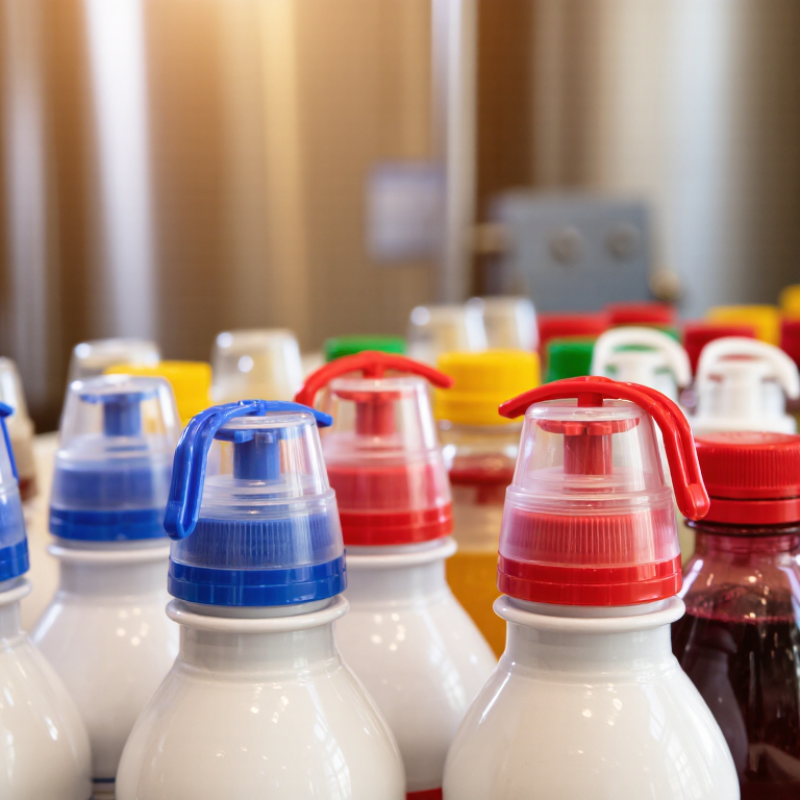
China’s beverage closure market covers several practical neck-finish systems. The 28 mm PCO 1881 cap is widely used for carbonated soft drinks, water, and juice bottles. Its shorter design reduces plastic use and supports high-speed filling lines. However, it requires compatible bottles and accurate application torque. A poor fit can cause leaks or paneling.
The 28 mm PCO 1810 closure has a deeper profile and remains useful with established bottle designs. It can provide reliable sealing, but it may use more material than newer lightweight formats. Sport closures suit active beverages and single-hand drinking. Their flip-top or pull-up structures need careful testing, especially around hinge strength, drip control, and repeated opening. Small details matter.
Crown caps are common with glass bottles containing beer, soda, or specialty drinks. They offer a familiar seal and strong tamper evidence when applied correctly. For Chinese production, buyers should request food-contact documentation, dimensional drawings, liner specifications, and batch inspection records. Factory experience matters, but paperwork alone is not enough. I would also test samples after transport, chilling, filling, and storage. A closure that performs well in a laboratory may behave differently on a busy production line. This is where many purchasing decisions need more reflection. Supplier samples, bottle compatibility, torque results, and closure consistency should guide the final choice.
Compare PP, HDPE, and rPET Using ISO 1183 Density and Barrier Data
Choosing the best beverage cap from China starts with material evidence, not appearance. ISO 1183 density testing typically places PP near 0.90–0.91 g/cm³, HDPE around 0.94–0.97, and rPET near 1.30–1.40. Density matters. It can support resin identification, process checks, and incoming quality control. However, ISO 1183 measures density, not oxygen or carbon dioxide barrier performance. A dense material is not automatically the best closure material.
PP caps are lightweight and often perform well under repeated opening and closing. HDPE offers useful toughness and strong moisture resistance, especially for products stored in humid conditions. rPET can provide better gas-barrier potential, but its performance depends on grade, recycled content, drying, and processing history. Small variations may affect torque, seal compression, and long-term leakage. Test the actual closure.
In practical sourcing work, I would request ISO 1183 results beside oxygen transmission, carbon dioxide loss, and water-vapor data. Testing should use the finished cap, liner, and bottle neck together. Temperature cycling and drop tests reveal problems that density cannot show. A neat ranking can mislead. PP may win on weight, HDPE on durability, and rPET on selected barrier needs. Yet none is universally superior. Recycled resin also deserves closer review, because batch consistency may be less predictable than laboratory samples suggest.
Verify Food Safety: GB 4806, EU 10/2011, FDA 21 CFR, and BRCGS
The best beverage caps and closures from China are not chosen by appearance alone. They must protect flavor, prevent leakage, and meet food-contact requirements. Polypropylene and high-density polyethylene are common choices for their strength and chemical resistance. However, the material grade, colorant, liner, and processing conditions all matter.
Ask suppliers for testing against China’s GB 4806 series, especially the applicable plastic and food-contact material sections. For products entering Europe, confirm compliance with EU 10/2011, including migration testing for the finished closure. FDA 21 CFR requirements may apply to export products entering the United States. Do not accept a general “FDA approved” statement. Request the exact regulation, material identity, test method, and laboratory report. Documentation matters.
BRCGS certification can strengthen supplier controls, traceability, hygiene, and change management. It does not automatically prove that every cap complies with every market’s chemical limits. Check batch records, declaration of compliance, and recent production samples. Test it. Measure torque, seal integrity, drop resistance, odor, and migration performance. Real production can differ from a sample. That is an uncomfortable weakness in many sourcing projects. Recheck after resin changes, new molds, recycled content, or color adjustments. A closure may pass one market’s rules but fail another’s requirements. The safest choice is a supplier that explains limitations clearly, maintains controlled records, and supports independent verification before shipment.
Test Sealing Quality with ASTM D3078, Torque, Leak, and Drop Data
What Are the Best Beverage Caps & Closures from China?
Reliable beverage caps and closures should be judged by measured performance, not appearance alone. In supplier evaluations, I look for ASTM D3078 bubble-emission results, application torque, removal torque, leak rates, and drop-test records. Each test answers a different question. None is sufficient alone.
ASTM D3078 ASTM D3078 can reveal air leakage in a sealed package through visible bubbles under controlled vacuum. However, it is not a universal closure test. The package structure, headspace, temperature, and test time can affect the result. A clear test report should state these conditions. Vague pass claims deserve questions.
Torque data should show both application and removal values across multiple production lots. Excessive torque may deform the neck finish. Low torque can cause leakage during transport. Leak testing after filling is essential. A cap may pass before filling and fail after carbonation or handling. Drop tests should use realistic heights, orientations, and temperatures. Inspect the cap, thread, liner, and seal after every impact.
Use actual samples, not only laboratory photos. Keep lot numbers and measurement records. Small details matter.
In one review, inconsistent torque came from a worn capping head, not poor cap design. That finding changed the corrective action.
I still would not treat a limited sample as proof of long-term reliability. A stronger evaluation combines repeated tests, production-line observation, and retained samples.
Rank Suppliers by Carbon, MOQ, Lead Time, and Total Cost per 1,000
What Are the Best Beverage Caps & Closures from China?
For a fair comparison, rank suppliers by carbon, MOQ, lead time, and landed cost per 1,000 pieces. Rank 1 should favor lightweight PP or HDPE closures with verified recycled content. PlasticsEurope’s Eco-profiles show that resin production dominates most closure footprints. The International Aluminium Institute reports that recycled aluminium uses about 5% of primary aluminium’s energy. However, thinner aluminium is not automatically greener. Transport, scrap, coatings, and rejection rates also matter.
Typical MOQ: 50,000–100,000 pieces. Lead time: 25–35 days. Indicative landed cost: US$22–35 per 1,000, excluding tooling.
MOQ may fall to 20,000–50,000 pieces, with 20–30-day delivery and US$18–30 per 1,000.
Expect 100,000-piece MOQs, 35–50-day lead times, and US$32–55 per 1,000.
These ranges reflect common sourcing quotations, not fixed market prices.
The World Bank’s Logistics Performance Index supports checking port reliability, not only factory speed. Ask for resin certificates, closure weight, carbon accounting boundaries, and production samples. A supplier quoting the lowest unit price may create higher total cost through leaks, mold fees, or excess inventory.
My own purchasing lesson is uncomfortable: carbon data is often less complete than MOQ data. Require evidence before ranking a supplier.
FAQS
It supports resin identification and incoming quality checks. PP is usually lighter than HDPE, while rPET is much denser. Density alone does not prove sealing or gas-barrier performance.
PP commonly measures about 0.90–0.91 g/cm³. It can reduce cap weight and support repeated opening. Lightweight is useful, but not always better.
HDPE offers toughness and strong moisture resistance. It may handle damp warehouses and transport better. Still, the finished closure needs testing.
rPET may offer stronger gas-barrier potential in selected grades. Results depend on recycled content, drying, and processing history. Batch variation can be uncomfortable.
Request oxygen transmission, carbon dioxide loss, and water-vapor data. Test the cap, liner, and bottle neck together. Separate material data can mislead.
Review bubble-emission testing, application torque, removal torque, leak rates, and drop-test results. Test filled packages, not only empty samples. Small details matter.
Measure application and removal torque across several production lots. Excessive torque may deform the neck finish. Low torque may cause leakage during transport.
Use realistic heights, impact directions, and temperatures. Inspect the thread, liner, cap, and seal after every impact. A single successful drop proves little.
Request the applicable migration reports, material identity, test methods, and declarations of compliance. Check requirements for the destination market. Avoid vague approval claims.
Repeat testing after resin changes, mold replacement, recycled-content changes, or color adjustments. Review retained samples and lot records. Production can differ from laboratory samples.
Conclusion
Selecting the right Beverage Caps & Closures from China requires more than comparing appearance or unit price. This guide explains the main categories, including 28 mm PCO 1881, 1810, sport, and crown types, and shows how each design suits different beverage packaging needs. It also compares PP, HDPE, and rPET by density under ISO 1183, along with practical barrier considerations such as moisture, oxygen, and carbonation protection.
Quality and supplier evaluation are equally important. Buyers should confirm compliance with GB 4806, EU 10/2011, FDA 21 CFR, and BRCGS requirements, while requesting test evidence for sealing performance. ASTM D3078, opening torque, leak resistance, and drop testing can help verify package reliability during filling, transport, and storage. Finally, suppliers should be ranked using carbon impact, minimum order quantity, lead time, and total cost per 1,000 pieces, enabling a balanced decision based on safety, performance, sustainability, and long-term supply stability.

Blog Tags: