Industry Insights & Resources

Beverage Industry Blog & Knowledge Hub

Formulation advice, manufacturing guides, regulatory trends, and strategic insights to scale your beverage brand.

0%

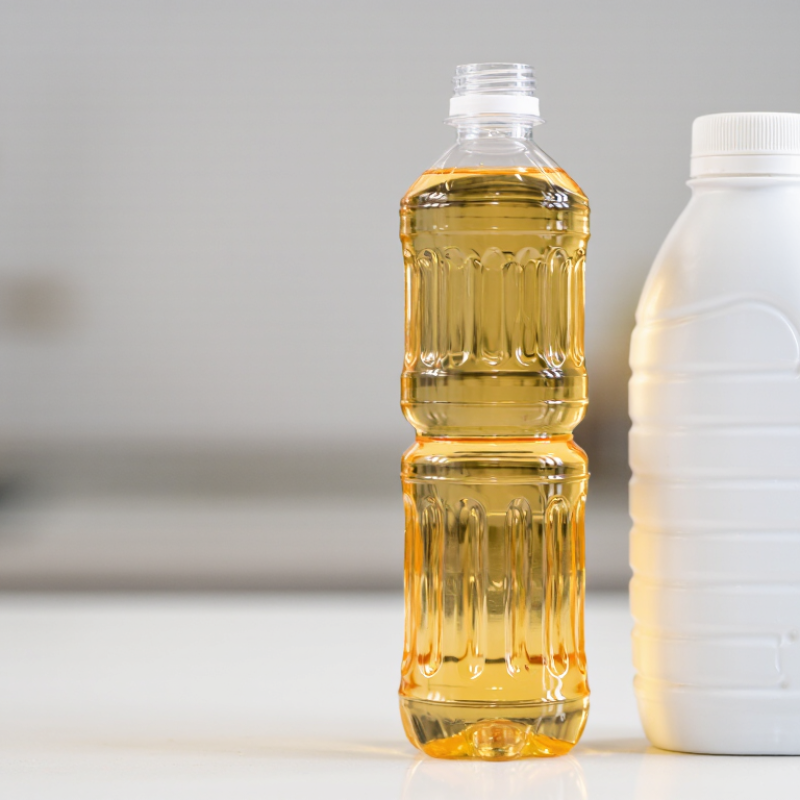
Choosing between PET and HDPE bottles in 2026 starts with the product, not the material trend. PET is often preferred when clarity matters. It displays the liquid and supports crisp shelf presentation. HDPE is opaque, sturdy, and comfortable to squeeze. Think of a clear beverage bottle beside an opaque household-cleaner container: each material solves a different packaging problem.

Packaging researcher Dr. Susan Selke’s work offers a useful principle, paraphrased here: “Choose packaging for product protection, practical use, and its end-of-life pathway.” That is a guiding idea, not a direct quotation. For a real specification, assess chemical compatibility, closure fit, filling conditions, shipping weight, and local recycling access. A bottle that looks ideal on a sample table may deform on a warm delivery route. Small details count. Wall thickness, label coverage, and color can also affect performance and recovery.

This guide compares PET and HDPE bottle types by application, protection needs, appearance, and handling. It will help buyers weigh clear versus opaque designs, rigid versus squeezable formats, and lightweighting against durability. There is no universal winner. Even a well-tested choice may need revision after a production trial; that part is easy to underestimate. The aim is a more informed shortlist of PET & HDPE Bottles for 2026, grounded in real use rather than packaging hype.
Which PET and HDPE Bottle Types Are Best in 2026?

Identify PET and HDPE by Resin Codes #1 and #2 (ASTM D7611)

The resin identification code is a useful starting point. Under ASTM D7611, code #1 identifies PET, or polyethylene terephthalate, and code #2 identifies HDPE, or high-density polyethylene. Check the molded or printed number, often near a bottle’s base. The code tells you the resin type, not whether a local program accepts the bottle. Important distinction.

PET bottles are often clear and lightweight, with a firm feel and a narrow neck. Water, juice, and cooking-oil bottles commonly use PET. HDPE bottles are often opaque or translucent and feel slightly waxy. Milk, shampoo, and household-cleaner containers are familiar examples. These are clues, not proof; color and shape can vary.

For a quick check, rinse the container and look for the resin number before sorting it. Don’t rely on appearance alone. A clear bottle may seem like PET, but the code is more dependable. Still, it does not describe every part, such as a label, cap, or added layer. That’s where identification gets less tidy. Follow local collection guidance, since acceptance rules differ by area, even when the bottle clearly carries #1 or #2.

Compare Density: PET ≈1.38 vs HDPE 0.94–0.97 g/cm³ (ASTM D792)

Density is a useful starting point when comparing PET and HDPE bottles. Under ASTM D792, PET is approximately 1.38 g/cm³, while HDPE typically ranges from 0.94 to 0.97 g/cm³. That is a substantial difference. For equal volumes of solid resin, PET weighs more. Yet a finished bottle’s weight also depends on its shape, wall thickness, and closure.

The density gap can affect handling and separation. In water, PET resin generally sinks, while HDPE resin generally floats. This difference can help distinguish materials during recycling, though labels, trapped air, and attached components may change what happens to a whole bottle. Small details matter. A density figure alone cannot predict a package’s durability or environmental impact.

For bottle selection, compare density alongside the intended contents, filling conditions, and required stiffness. A lightweight HDPE design may suit some applications, while PET’s greater density does not automatically make it the better choice. I would be cautious about treating these numbers as a simple quality ranking. They describe the material, not the complete bottle. Real-world performance depends on design and testing, and that distinction is easy to overlook.

Match Bottle Properties to Product Needs: Clarity, Barrier, and Chemical Resistance

Clear, see-through packaging favors PET. Its glass-like appearance helps shoppers inspect color, fill level, and sediment, while its stronger oxygen barrier than standard HDPE can help protect aroma-sensitive drinks. HDPE is naturally opaque and usually better suited to products needing moisture protection, impact tolerance, or broad resistance to household chemicals. It also handles rougher warehouse contact well. Neither resin is universally resistant: concentrated cleaners, oils, and long storage can change performance, so test the exact formula in the finished bottle.

For real-world design, compare wall thickness, cap seal, temperature, and shelf life—not resin labels alone. A 2023 NAPCOR report put the U.S. PET bottle recycling rate at 29.1%, a useful reminder that clear PET can have an established recovery stream, but local sorting still matters. Ask suppliers for oxygen- and water-vapor-transmission results measured under stated conditions; ASTM D3985 and F1249 describe common test methods. A small lab test can prevent a costly surprise. Weaker points remain: colorants, labels, and bottle geometry may affect sorting, appearance, or barrier results, and a neat spec sheet cannot fully predict months on a warm shelf.

Which PET and HDPE Bottle Types Are Best in 2026?

Match bottle properties to product needs: clarity, barrier, and chemical resistance.

Typical packaging-grade resin performance, shown as a qualitative 1–5 index (1 = lower, 5 = higher), not standardized test results. PET is typically chosen when product visibility and oxygen protection matter; HDPE is often preferred for moisture protection and broad chemical compatibility. Actual performance depends on resin grade, bottle design, wall thickness, and product formulation. Confirm compatibility and barrier requirements with testing.

Compare Recovery Data: NAPCOR’s 33% U.S. PET Rate in 2023 and EPA’s HDPE Data

Recovery figures offer a practical starting point for comparing PET and HDPE bottles in 2026. NAPCOR reported a 33% U.S. PET bottle recycling rate for 2023. EPA’s 2018 data put the recycling rate for natural HDPE bottles at 29.3%. The dates differ. These figures show actual recovery, not simply whether a bottle carries a recycling symbol.

The comparison is useful, but not perfectly matched. NAPCOR’s figure covers PET bottles in 2023, while EPA’s HDPE figure covers a specific bottle category from 2018. Collection systems and sorting capacity can change over time, so the percentages should not be treated as a direct 2026 ranking. A clear, empty bottle is also easier to sort than one with dark residue, a tight sleeve, or a cap left attached when local instructions say otherwise.

For buyers choosing packaging, both materials have established bottle-recycling streams, but local access matters. Check which shapes and colors nearby facilities accept, and whether they require caps to be removed. A number on a report can feel decisive. It isn’t the whole story. Even a recyclable bottle may miss recovery if it is discarded incorrectly or arrives too dirty for processing.

Choose by Use Case: PET for Clear Packaging, HDPE for Durable Opaque Bottles

Which PET and HDPE Bottle Types Are Best in 2026?

Choose by Use Case: PET for Clear Packaging, HDPE for Durable Opaque Bottles

Choose PET when shoppers or staff need to see the contents. Its clarity suits drinks, personal-care liquids, and products where color or fill level matters. A clear bottle can also reveal sediment or discoloration; useful, though not always flattering. PET bottles are lightweight, and their shape can support easy pouring and shelf display. NAPCOR’s 2023 PET Recycling Report put the U.S. PET bottle recycling rate at 33% in 2022. That figure is a national average, not a guarantee that every local program accepts every bottle.

Choose HDPE when a bottle needs a sturdier feel and an opaque wall. It works well for household cleaners, lotions, and refill containers that may be squeezed or handled repeatedly. Its opacity can help shield light-sensitive contents, but it hides the fill level. Not a small trade-off. Resin grade, wall thickness, cap fit, and bottle geometry all affect real-world performance, so compare filled samples under expected storage and shipping conditions. Avoid treating “more durable” as universal: an awkward handle or weak closure can undermine a robust bottle. Match the material to the actual use, then check local collection guidance before finalizing the package.

FAQS

How does PET density compare with HDPE density?

PET is about 1.38 g/cm³. HDPE is usually 0.94–0.97 g/cm³. Equal volumes of PET resin weigh more.

Does a denser resin always make a stronger bottle?

No. Shape, wall thickness, and closure affect bottle performance. Density alone is a rough shortcut, not a verdict.

Why do PET and HDPE behave differently in water?

PET resin generally sinks, while HDPE resin generally floats. Air, labels, and attached parts can change what happens to a whole bottle.

Which material is better when people need to see the contents?

PET is usually clearer. It can show fill level, color, and sediment. Sometimes that visibility is unflattering, too.

When might an opaque HDPE bottle be a better fit?

HDPE suits products needing an opaque, sturdy-feeling bottle. Its wall can help shield light-sensitive contents, but it hides the fill level.

Which material offers better protection from oxygen or moisture?

PET generally provides a stronger oxygen barrier than standard HDPE. HDPE may suit products needing moisture protection. Check test results for the exact bottle.

Are PET and HDPE always resistant to household products?

No. Concentrated cleaners, oils, and long storage can affect performance. Test the actual formula in a finished bottle. Small tests matter.

What should be checked before choosing a bottle?

Compare the contents, temperature, shelf life, wall thickness, cap seal, and expected handling. Try filled samples during storage and shipping.

Does a clear PET bottle guarantee local recycling?

No. Collection rules vary by location. Labels, colorants, and bottle design may affect sorting, so check local guidance. A national figure cannot promise local acceptance.

Conclusion

PET & HDPE Bottles are identified by resin codes #1 and #2 under ASTM D7611. Their different densities help explain how they perform: PET is about 1.38 g/cm³, while HDPE ranges from 0.94 to 0.97 g/cm³, based on ASTM D792. PET is typically clear and offers useful barrier properties, making it a strong choice when product visibility matters. HDPE is generally opaque, durable, and resistant to many chemicals, which suits bottles that need to withstand everyday handling or contain products requiring chemical resistance.

Recycling performance is another consideration. The reported U.S. PET recycling rate was 33% in 2023, while EPA data provides a basis for comparing HDPE recovery. Because collection and measurement can vary, compare the figures in context. In general, choose PET for clear packaging and HDPE for durable, opaque bottles, matching the material to the product’s protection, appearance, and handling needs.

Aria

Aria

Aria is a seasoned marketing professional with a deep expertise in the company’s offerings and a passion for sharing knowledge through insightful content. With a background in strategic marketing, Aria possesses a unique blend of creative flair and analytical skills, enabling the development of......