Industry Insights & Resources

Beverage Industry Blog & Knowledge Hub

Formulation advice, manufacturing guides, regulatory trends, and strategic insights to scale your beverage brand.

0%

China Best Organic Beverage Ingredients Supplier? This question deserves more than a low-price comparison. Organic Beverage Ingredients influence flavor, nutrition, label claims, and consumer trust. A reliable supplier must show more than attractive product photographs. Certification documents, batch records, laboratory results, and traceable sourcing should be easy to review.

Food-system authority Michael Pollan once wrote, “Eat food. Not too much. Mostly plants.” This simple sentence remains useful for beverage developers. Organic ingredients should support clear formulations, not hide weak quality behind fashionable language. A professional supplier may offer organic fruit powders, botanical extracts, natural sweeteners, tea ingredients, and functional blends. Yet every ingredient needs a practical review. Check its origin, processing method, allergen status, moisture level, solubility, and storage conditions. Small details matter. A powder that settles quickly can damage an otherwise promising drink.

China has capable ingredient manufacturers, but quality can vary between factories and batches. That reality should not be ignored. The best partner combines verified organic certification with consistent production, responsive communication, and technical support. Request samples before signing a large contract. Compare color, aroma, dissolution, and taste in the actual beverage formula. Ask how the supplier handles seasonal changes and nonconforming batches. A supplier that welcomes difficult questions is usually more dependable.

There is no perfect sourcing decision. Cost, speed, sustainability, and performance may conflict. Still, careful evaluation can reduce avoidable risks. This guide examines how to identify a trustworthy Chinese supplier of Organic Beverage Ingredients, with attention to evidence rather than marketing promises.
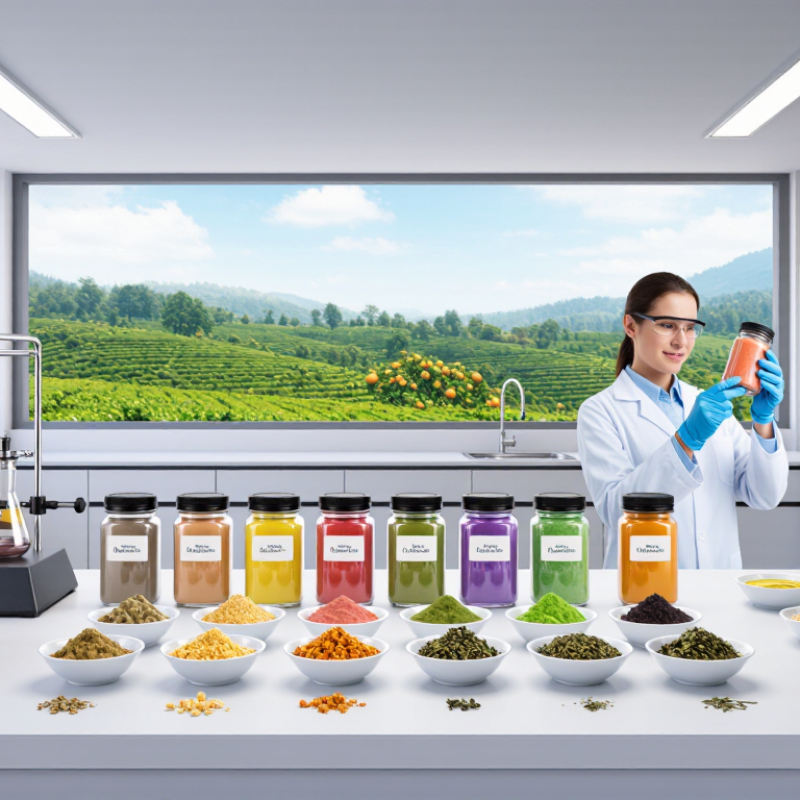
China Best Organic Beverage Ingredients Supplier?

Global Organic Market Context: €134.8B Sales and 96.4M Organic Hectares in 2022

China Best Organic Beverage Ingredients Supplier?

The global organic market reached €134.8 billion in sales in 2022. Organic agriculture covered 96.4 million hectares worldwide. These figures show strong demand, but they also expose a sourcing challenge: organic growth requires dependable ingredients, not attractive claims alone.

For beverage production, a capable Chinese supplier should provide certified organic tea, fruit powders, botanical extracts, or natural sweeteners with clear documentation. Each batch needs traceability from farm to processing site. Buyers should review organic certificates, certificates of analysis, pesticide residue results, microbiological tests, and heavy-metal reports. Testing should match the destination market’s requirements. A certificate alone is not enough.

Practical sourcing also depends on moisture control, color stability, solubility, and clean sensory performance. A fruit powder may look bright but dissolve poorly in cold water. That detail can affect an entire beverage formula. Experienced suppliers should offer samples, stable specifications, and realistic lead times. Small trial orders help reveal problems early.

No supplier is perfect.

I would still ask difficult questions about crop seasons, processing aids, storage humidity, and certificate renewal dates. Some documentation may be complete, yet communication can remain slow. That weakness deserves attention. Reliable cooperation is built through verified records, repeat testing, and transparent responses when a batch does not meet expectations.

China’s Organic Beverage Ingredient Supplier Landscape and Market Definition

China Best Organic Beverage Ingredients Supplier?

China’s organic beverage ingredient landscape is broader than a supplier list. It includes certified botanical extracts, fruit powders, natural sweeteners, grains, tea ingredients, and functional compounds. The World of Organic Agriculture 2024 reported that global organic retail sales reached about €135 billion in 2022. This figure shows strong demand, but it does not define China’s ingredient market. A practical market definition should consider certification, processing capability, traceability, export experience, and application support.

Supplier quality varies considerably. Some factories produce ingredients directly. Others mainly coordinate trading networks. In my experience, the difference appears in small details. Batch records should identify farms, harvest dates, processing temperatures, and laboratory methods. The supplier should also explain organic scope clearly. Certification may cover one facility, not every ingredient or production line. Grand View Research forecasts continued double-digit growth for the global organic beverages market through 2030. However, growth data alone cannot prove ingredient quality. This is where buyers need more evidence.

Tips: Request recent certificates, pesticide-residue results, microbiological reports, and sample retention records. Test the ingredient in the final beverage, not only in isolation. Check flavor stability after pasteurization and storage. The process is not perfect. Certificates can expire, specifications can change, and communication may fail. A careful audit should remain part of supplier selection, even after a successful trial order.

Certification Verification: GB/T 19630, EU Organic, and USDA NOP Standards

China Best Organic Beverage Ingredients Supplier?

Certification verification should begin with the standard, not a logo on a brochure. GB/T 19630 defines China’s organic production, processing, and management requirements. It is not the certificate itself. Request the current certificate, certification scope, audited facility, product category, and expiry date.

For EU organic claims, check compliance with Regulation (EU) 2018/848 and the authorized control body. USDA NOP verification requires an active organic certificate covering the relevant ingredient and processing activity. Do not assume one approval automatically satisfies all three systems. Standards differ in labeling, permitted inputs, audit methods, and supply-chain controls.

Traceability matters more than attractive paperwork. Match the certificate to the factory, ingredient name, production site, and batch records. Ask for transaction documents when required, plus test results for pesticides, heavy metals, microorganisms, and solvent residues. Review whether processing aids and cleaning procedures fit the claimed standard. One detail is easy to miss. A certificate may be valid, while the specific beverage ingredient remains outside its certified scope. Practical audits often reveal gaps between documents and warehouse labels. That gap deserves a written explanation, not a promise. Supplier reviews should be repeated when certificates, facilities, formulas, or regulations change. Mistakes can still happen, especially when translated documents use inconsistent product names. Clear records and independent verification reduce that risk.

China Best Organic Beverage Ingredients Supplier? - Certification Verification: GB/T 19630, EU Organic, and USDA NOP Standards
Verification Dimension GB/T 19630
China Organic Product Standard
EU Organic
Regulation (EU) 2018/848
USDA NOP
7 CFR Part 205
What Buyers Should Verify
Regulatory framework National standard for organic production, processing, labeling, and management-system requirements in China. European Union legal framework for organic production, labeling, controls, and imports, applicable from 1 January 2022. United States National Organic Program requirements established under 7 CFR Part 205. Confirm that the certificate is issued under the standard required in the destination market and for the actual product category.
Primary market application Organic products intended for sale or use under China’s organic certification system. Organic products placed on the EU market, including imported organic ingredients and processed foods. Organic agricultural products and processed products sold, labeled, or represented as organic in the United States. A certificate for one market does not automatically replace certification or import-control requirements in another market.
Typical beverage ingredient scope Organic tea, coffee, fruit ingredients, botanical materials, sweeteners, grains, extracts, and processed beverage ingredients when covered by the approved certificate. Certified organic agricultural ingredients, including botanical materials, fruit preparations, tea, coffee, grain ingredients, and other permitted beverage components. Certified organic agricultural ingredients and processed beverage inputs that comply with NOP production, handling, and labeling rules. Check the certificate annex or scope list for the exact ingredient name, form, processing activity, and production site.
Production and processing controls Requires documented organic production and processing controls, prevention of contamination, separation from non-organic materials, and traceable operating procedures. Requires organic production and processing practices, prevention of commingling and contamination, approved substances, and documented operator controls. Requires an organic system plan, approved production and handling practices, prevention of commingling and prohibited-substance contact, and documented controls. Request the applicable organic system plan, processing flow, cleaning procedure, allergen controls, and segregation records.
Permitted inputs and additives Inputs, processing aids, additives, and cleaning materials must comply with the applicable Chinese organic requirements and approved-use restrictions. Only substances permitted under the relevant EU organic rules may be used; the allowed list and conditions of use must be checked for the specific application. Inputs and non-agricultural ingredients must comply with the applicable NOP categories and restrictions, including the National List of Allowed and Prohibited Substances. Obtain the full formulation and verify every additive, carrier, solvent, processing aid, and anti-caking or preservation substance separately.
Traceability requirement Organic products must be traceable through relevant production, processing, storage, and transaction records. Operators must maintain records that demonstrate compliance, product flow, supplier identity, quantities, and control of organic status. Certified operations must maintain records that fully disclose production, handling, sales, and organic product movements for the required retention period. Compare batch numbers, purchase records, production records, inventory movements, certificates, and shipping documents.
Certification and inspection Certification is performed through China’s organic conformity-assessment system by an authorized certification body. Certification and control are conducted by an EU-recognized control body or control authority, or by an approved equivalent system for imports. Certification is conducted by a USDA-accredited certifying agent, unless a specific regulatory exemption applies. Verify the certifier’s accreditation or recognition, certificate number, issue date, expiry date, and certified operation address.
Certificate scope accuracy The certificate should identify the certified operator, production or processing location, product category, and approved organic activities. The certificate should identify the operator, activities, products, organic status, and applicable control body under the EU control system. The certificate should identify the certified operation, certified activities, product categories, and applicable NOP certification status. Do not rely on a general “organic” statement. Match the certificate scope to the exact ingredient, facility, and processing step being purchased.
Organic labeling threshold Organic labeling must follow Chinese organic product certification and labeling rules, including the applicable certification mark and traceability information where required. For a processed product to use the EU organic designation in its name, at least 95% of its agricultural ingredients by weight must be organic, subject to applicable rules. “100 percent organic” requires all ingredients and processing aids, excluding limited allowed exceptions, to be organic. “Organic” generally requires at least 95% organic ingredients. “Made with organic” requires at least 70%. Confirm the intended claim before artwork approval. Ingredient certification alone does not determine the final beverage label category.
Import and transaction documentation Importers and distributors should retain the relevant organic certificate, commercial documents, batch information, and applicable Chinese import or labeling records. Imported organic products may require an electronic certificate of inspection through the EU organic control system, depending on the origin, product, and import arrangement. Imported organic products generally require USDA NOP compliance and applicable import documentation, including an electronic NOP Import Certificate where required. Verify documentation before shipment, not only after arrival. Confirm that product names, quantities, lot numbers, and country information are consistent.
Verification of current status Check the current certificate directly with the relevant certification body or official certification information system where available. Check the certificate and control-body status through the responsible EU-recognized control body or applicable official import-control records. Confirm the certifying agent’s accreditation and the operation’s current certificate through the certifier or applicable USDA organic integrity records. Validate authenticity using the certificate number, QR code or official database entry, legal entity, site address, product scope, and validity dates.
Common red flags Expired certificate, missing certification mark information, product not listed in the scope, or a certificate issued for a different facility. Use of an outdated regulation reference, missing control-body details, unsupported EU organic logo claim, or no valid import-control documentation. Certificate issued by a non-accredited organization, incorrect NOP labeling category, unsupported “USDA organic” claim, or incomplete import records. Treat unverifiable certificates, inconsistent legal names, altered PDFs, mismatched addresses, and unusually broad product scopes as high-risk findings.
Recommended supplier evidence package Current organic certificate; detailed product scope; certification-body information; organic system or management plan summary; ingredient specification; formulation statement; batch traceability records; certificate of analysis where relevant; allergen and contaminant controls; storage and transport procedures; and recent transaction or shipment documents. Use a document-by-document review and retain an approval record for each ingredient and production site.
Buyer’s note: Certification standards are not interchangeable. Final acceptance should be based on the destination market, product formulation, processing site, label claim, current certificate status, and applicable import-control documentation. Organic certification does not by itself guarantee a specific taste, nutritional profile, pesticide-residue result, or food-safety specification.

Ingredient Portfolio: Organic Tea, Botanicals, Fruit, Sweeteners, and Probiotics

China’s Organic Beverage Ingredient Portfolio: Tea, Botanicals, Fruit, Sweeteners, and Probiotics

China can be a strong sourcing base for organic beverage ingredients when verification is disciplined. Organic tea may include green, black, oolong, and matcha grades, with distinct harvest aromas and soluble solids. Botanicals such as hibiscus, chamomile, ginger, and mint add color, fragrance, and functional positioning. FiBL and IFOAM reported 96.4 million hectares of organic farmland globally in 2022. That figure shows supply is expanding, but certification quality still varies between markets. Traceability matters.

Organic fruit powders, purees, and concentrates support cleaner labels and practical formulation. Mango, berry, citrus, and peach profiles can improve flavor without artificial masking. Organic cane sugar, coconut sugar, and stevia offer different sweetness curves and processing needs. Fruit powders may cake in humid warehouses. This is often underestimated. A reliable supplier should provide origin records, current organic certificates, pesticide screening, heavy-metal results, microbiological testing, and batch-specific certificates of analysis.

Probiotics require additional technical attention. Strain identity, viable count, moisture control, and storage temperature directly affect beverage performance. Grand View Research estimated the global probiotics market at about 77 billion US dollars in 2022, while projections differ by product definition. The difference deserves caution. Pilot trials should measure sedimentation, flavor change, and probiotic survival through shelf life. No portfolio is perfect; transparent limitations are more useful than impressive catalogs.

Supplier Evaluation: Traceability, Testing, MOQ, Capacity, and Lead Time

China Best Organic Beverage Ingredients Supplier?

Choosing the best Chinese organic beverage ingredient supplier requires evidence, not polished photographs. FiBL and IFOAM reported global organic retail sales of €134.8 billion in 2022. That growth increases pressure on verification. Ask for farm, processor, and shipment lot records. Each lot should connect to harvest dates, drying conditions, and storage temperature. Request current organic certificates and verify their scope, expiry, and product names. Certificates alone are not enough.

Independent testing should cover pesticide residues, heavy metals, pathogens, moisture, and active compounds. Use an ISO/IEC 17025-accredited laboratory where possible. The 2024 World of Organic Agriculture report counted about 4.5 million organic producers worldwide. This scale makes chain-of-custody discipline essential. Testing should use retained samples from the actual production lot, not only showroom samples.

MOQ should match your launch forecast, not the supplier’s preferred container. Ask for trial quantities, retained samples, and a written failure procedure. Capacity claims need production records, seasonal sourcing plans, and backup drying lines. For lead time, separate sampling, testing, production, and export clearance. Request a calendar with buffer days. One overlooked delay can damage a beverage launch. Yet supplier questionnaires are imperfect. Small farms may lack digital records, while large files can hide inconsistent lots. An on-site or video audit, plus random pre-shipment testing, provides stronger practical confidence. Do not reward the lowest MOQ until traceability survives a real batch.

FAQS

What makes a dependable organic beverage ingredient supplier?

Dependable suppliers provide valid certificates, batch records, testing reports, and clear farm-to-processing traceability. Photos prove little. Communication should remain honest when problems appear.

Which organic ingredients are commonly available for beverage production?

Options may include green tea, black tea, oolong tea, matcha, hibiscus, chamomile, ginger, and mint. Fruit powders, purees, concentrates, natural sweeteners, and probiotics are also available. Each ingredient behaves differently in a drink.

Which documents should buyers request?

Request current organic certificates, certificates of analysis, pesticide results, microbiological tests, and heavy-metal reports. Check product names, certificate scope, expiry dates, and production lots. A certificate alone is not enough.

How can buyers verify ingredient traceability?

Ask for farm records, processor details, harvest dates, drying conditions, storage temperatures, and shipment lot numbers. The documents should connect clearly. A missing link deserves questions.

What testing is important before purchasing organic ingredients?

Testing should cover pesticide residues, heavy metals, pathogens, moisture, and relevant active compounds. Use retained samples from the actual production lot. Showroom samples may not represent later batches.

Why should buyers test fruit powders in cold water?

A bright fruit powder may dissolve poorly, clump, or settle at the bottom. Test solubility, sedimentation, color stability, aroma, and taste in realistic formulas. Appearance can mislead.

What should buyers check when purchasing probiotics?

Check strain identity, viable count, moisture control, storage temperature, and shelf-life performance. Pilot trials should measure survival and flavor changes over time. Results may vary.

How should buyers evaluate minimum order quantities and lead times?

Match the minimum order quantity to your launch forecast, not the supplier’s preferred container size. Request trial quantities and a written failure procedure. Separate sampling, testing, production, and export clearance in the schedule.

Is the lowest price or smallest order always the best choice?

No. A small order has little value if traceability fails during a real batch. Compare documentation, testing, capacity, storage controls, and communication speed. The cheapest option may create expensive delays.

Conclusion

China’s organic beverage ingredient market is developing within a global organic sector that reached approximately €134.8 billion in sales and 96.4 million organic hectares in 2022. This article explains how to define and assess a reliable Chinese supplier of Organic Beverage Ingredients, covering product quality, production capabilities, and compliance requirements. It also outlines the importance of verifying certifications such as GB/T 19630, EU Organic, and USDA NOP according to the target market and product category.

A well-rounded ingredient portfolio may include organic tea, botanical extracts, fruits, natural sweeteners, and probiotics for different beverage applications. When evaluating suppliers, buyers should examine farm-to-factory traceability, laboratory testing, contamination controls, minimum order quantities, manufacturing capacity, and lead times. These factors help ensure consistent quality, transparent sourcing, and dependable supply while supporting product development and regulatory readiness in domestic and international markets.

Ethan

Ethan

Ethan is a dedicated marketing professional with a profound expertise in our company’s array of products and services. His extensive knowledge of the industry enables him to create insightful content that not only elucidates the benefits of our offerings but also positions our company as a thought......