Industry Insights & Resources

Beverage Industry Blog & Knowledge Hub

Formulation advice, manufacturing guides, regulatory trends, and strategic insights to scale your beverage brand.

0%

Glass Beverage Bottles remain a trusted choice for beer, wine, spirits, water, juice, and premium soft drinks. Their clear surfaces, solid weight, and chemical stability signal quality before the first sip. However, modern buyers expect more than appearance. They also examine recycled content, energy use, logistics, closure compatibility, and supply reliability.

Industry data shows why this market deserves close attention. FEVE’s recent statistics indicate that European container-glass production remains measured in tens of millions of tonnes annually, supported by strong beverage demand. The European Commission also reports high recycling performance for glass packaging compared with several other packaging materials. Globally, Grand View Research and Smithers identify sustainability, premium branding, and refillable packaging as important growth factors. Their market estimates differ, though. Definitions, regions, and product categories are not always consistent.

That difference matters.

This ranking examines the Top 10 Glass Beverage Bottle Manufacturers Worldwide through practical criteria. These include production scale, geographic coverage, bottle design capability, quality systems, lightweighting experience, and recycling commitments. Company history also matters. A supplier may offer an attractive bottle but struggle with mold availability or long-distance delivery. Another may provide dependable volume but limited customization. Real purchasing decisions are rarely simple.

The selected manufacturers represent established industry experience, not automatic approval for every project. Buyers should verify certifications, technical drawings, food-contact compliance, lead times, and local freight conditions before signing contracts. Reported figures can change. Some information may also require further checking. Still, this comparison offers a useful starting point for brands seeking durable, responsible, and visually distinctive glass packaging.
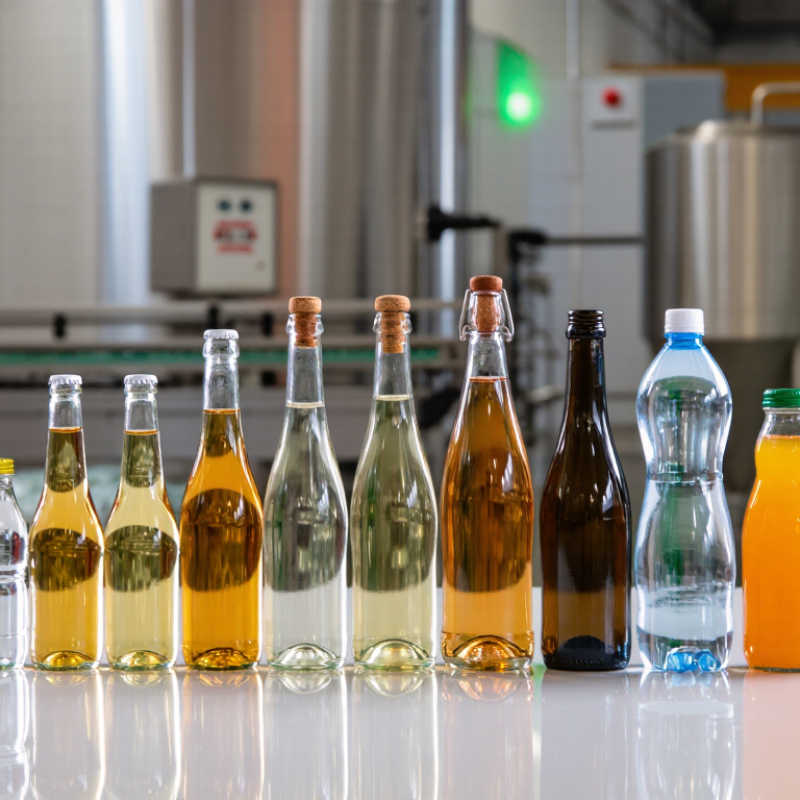
Top 10 Glass Beverage Bottle Manufacturers Worldwide

Definition and Scope of Glass Beverage Bottle Manufacturing

Top 10 Glass Beverage Bottle Manufacturers Worldwide

Definition and Scope of Glass Beverage Bottle Manufacturing

Glass beverage bottle manufacturing converts silica sand, soda ash, limestone, and recycled glass into containers for water, juice, soft drinks, and other beverages. The process includes material batching, melting at roughly 1,400–1,600°C, forming, annealing, inspection, decoration, and shipment. Not merely a furnace. It also requires mold engineering, color consistency, lightweighting, and food-contact quality records.

Grand View Research estimates the global glass packaging market reached about US$77 billion in 2023. Its report projects approximately 4.5% annual growth from 2024 to 2030. This figure covers more than beverage bottles, so direct rankings require caution.

FEVE reported an 80.8% glass packaging recycling rate in Europe during 2022. That statistic shows why cullet availability matters. Recycled glass can reduce furnace energy demand, but supply quality remains uneven.

A meaningful manufacturer comparison should examine furnace capacity, annual tonnage, defect rates, recycled content, energy intensity, and returnable-bottle capability. A 330-milliliter bottle may look simple, yet its neck finish, wall thickness, and thermal resistance demand tight control. Reported capacity can also hide important differences. Some plants produce standard containers efficiently, while others handle lightweight designs or complex colors. The boundary is not perfectly clean. Regional recycling rules and transport distances can change the real environmental result.

Key Criteria for Ranking the Top 10 Global Manufacturers

Ranking the top global glass beverage bottle manufacturers requires more than comparing factory size. A credible assessment begins with production capacity, furnace reliability, and consistent delivery records. Site visits can reveal details that brochures often miss, such as clean storage areas, line maintenance, and damaged-bottle controls. Technical experience matters here.

Quality systems deserve strong weighting. Reviewers should examine dimensional tolerances, glass strength, closure compatibility, and food-contact testing. Independent certifications can support credibility, but they should not replace practical verification. Sample bottles should survive filling, transport vibration, and repeated temperature changes. Small defects matter.

Sustainability also shapes a responsible ranking. Manufacturers using recycled glass, efficient furnaces, and measurable energy data show stronger long-term planning. However, environmental claims need clear evidence. Vague percentages create doubt. Customer feedback, delivery performance, regional logistics, and response times should complete the evaluation. A supplier may offer enormous capacity yet struggle with smaller custom orders. That weakness deserves attention. No scorecard is perfect. Weighting criteria differently can change the final list, especially when cost, innovation, and reliability compete. Transparent methods make the ranking more useful for beverage companies selecting a dependable manufacturing partner.

Top 10 Glass Beverage Bottle Manufacturers Worldwide - Key Criteria for Ranking the Top 10 Global Manufacturers

Rank Anonymized Manufacturer Primary Operating Footprint Estimated Annual Glass Capacity
(Million Tonnes)
Manufacturing Sites
(Approx.)
Countries or Markets Served
(Approx.)
Core Beverage Bottle Capabilities Recycled Glass Integration Lightweighting & Sustainability Disclosure Overall Score
(100)
1 Manufacturer A Europe, North America and Latin America 2.0–2.5 30+ 70+ Standard and premium bottles for beer, wine, spirits, soft drinks and water High Advanced 94
2 Manufacturer B Europe, Asia-Pacific and the Middle East 1.7–2.2 25+ 60+ High-volume beer, spirits, food-grade beverage and specialty glass packaging High Advanced 91
3 Manufacturer C North America, Europe and Asia-Pacific 1.4–1.9 20+ 50+ Beverage containers, custom shapes, colored glass and premium packaging Medium–High Advanced 88
4 Manufacturer D Europe and North America 1.1–1.5 15+ 45+ Beer, wine, spirits, carbonated beverages and returnable bottle systems High Strong 85
5 Manufacturer E Asia-Pacific and the Middle East 0.9–1.3 12+ 35+ Mass-market beverage bottles, export packaging and lightweight container formats Medium–High Strong 82
6 Manufacturer F Latin America and North America 0.8–1.2 10+ 30+ Beer, spirits, soft drinks, water and regional returnable bottle programs Medium Strong 79
7 Manufacturer G Europe and Asia-Pacific 0.7–1.0 9+ 25+ Premium spirits, wine bottles, specialty colors and decorative glass packaging Medium Strong 76
8 Manufacturer H Asia-Pacific 0.6–0.9 8+ 20+ Beer, spirits, ready-to-drink beverages and high-volume standard bottles Medium Developing 73
9 Manufacturer I Middle East, Africa and South Asia 0.5–0.8 6+ 18+ Regional beer, soft drink, water and food-service beverage containers Medium Developing 69
10 Manufacturer J Eastern Europe and Central Asia 0.4–0.7 5+ 15+ Standard beverage bottles, regional spirits packaging and returnable formats Medium Developing 66
Ranking methodology: The composite score weights production scale, geographic reach, beverage-container capability, recycled-glass integration, lightweighting expertise, sustainability transparency and quality-system maturity. Capacity, site count and market coverage are presented as industry-based ranges because manufacturers report these metrics using different scopes and reporting periods.

Profiles of the Top 10 Glass Beverage Bottle Manufacturers

The global glass beverage bottle sector includes manufacturers with distinct strengths, equipment, and regional advantages. One European producer focuses on high-speed forming lines and consistent neck finishes. Another specializes in lightweight bottles that reduce transport weight without sacrificing pressure resistance. A North American manufacturer is known for large returnable formats used by beverage distributors. Its testing teams inspect wall thickness, thermal shock, and closure fit.

A South American producer combines local sand resources with recycled glass from collection networks. A Central European company invests heavily in furnace efficiency and automated defect detection. An Asian manufacturer serves high-volume beverage markets with flexible mold changes and competitive lead times. Another Asian specialist produces colored glass for products requiring light protection. A Middle Eastern facility emphasizes export packaging and container strength during long-distance shipping. An African manufacturer supports regional bottlers with practical bottle designs and shorter delivery routes. A smaller global supplier earns attention through custom shapes, limited production runs, and responsive mold development.

These profiles show why capacity alone cannot define manufacturing quality. Reliable suppliers document batch testing, traceability, and food-contact controls. Experienced buyers should also examine furnace age, recycled-content consistency, and emergency supply plans. Public information is sometimes incomplete. That weakness deserves scrutiny. A polished sustainability claim means little without measurable energy, water, and cullet data. In practice, the strongest partners combine engineering discipline with clear communication, even when production problems occur.

Manufacturing Technologies, Product Types, and Quality Standards

Top 10 Glass Beverage Bottle Manufacturers Worldwide

Manufacturing technologies separate leading producers from ordinary suppliers. High-speed IS machines form consistent bottles, while NNPB technology reduces weight and material use. Automatic inspection systems check wall thickness, cracks, chips, and dimensional accuracy. Smithers’ Future of Global Packaging to 2028 identifies lightweighting and improved recycling as major packaging technology drivers. However, lighter glass can become fragile when design testing is rushed.

Product variety also matters. Leading factories typically produce standard beer, wine, juice, spirit, and water bottles. They may also offer amber, flint, green, and customized molded glass. Surface coatings reduce scuffing during conveyor movement. Thermal treatments can improve strength. Yet, decoration and coating choices must remain compatible with recycling systems. This point is often underestimated.

Quality standards require measurable discipline. ISO 9001 supports documented process control, while ISO 22000 and HACCP address food safety risks. Specifications should include capacity tolerance, thermal-shock resistance, internal pressure, and migration testing. FEVE reported an 80.8% glass packaging recycling rate in Europe for 2022. Its industry guidance also notes that every 10% increase in furnace cullet can reduce energy demand by roughly 2.5%. These figures make recycled content commercially important, not merely cosmetic. Still, factory audits should verify actual cullet levels, furnace performance, and defect records. Certificates alone are insufficient.

Global Markets, Sustainability Practices, and Industry Trends

Top 10 Glass Beverage Bottle Manufacturers Worldwide

Global Markets, Sustainability Practices, and Industry Trends

The top ten glass beverage bottle manufacturers serve different regional needs. European producers often emphasize premium spirits, while Asian factories support high-volume beer and soft drink markets. North American plants increasingly supply shorter regional routes. A practical ranking should examine furnace capacity, quality control, recycled content, delivery reliability, and design flexibility. No ranking is perfect. Public data is often incomplete or self-reported.

Sustainability now shapes factory decisions. Manufacturers use recycled glass, called cullet, to reduce furnace energy and raw material demand. A green bottle may contain substantial recycled content, but collection systems differ sharply between countries. Lightweighting also lowers transport emissions, although thinner walls can increase breakage risks. Refillable bottles remain useful in markets with reliable return networks. They are not automatically greener everywhere.

Industry investment is becoming more regional. New plants are appearing near beverage demand, helping reduce long-distance transport and supply disruptions. Electric melting technology is developing, but large furnaces still require stable, high-temperature energy. Digital inspection cameras detect tiny cracks before shipment. Traceability systems can record batch numbers, recycled content, and production dates. Useful progress, though not flawless. Manufacturers still need better public reporting, especially for water use, furnace emissions, and actual recycling outcomes. Seasonal demand also tests whether sustainability plans work beyond carefully controlled pilot projects.

FAQS

What raw materials are used to make glass beverage bottles?

Manufacturers combine silica sand, soda ash, limestone, and recycled glass. They melt the mixture at roughly 1,400–1,600°C. Very hot.

What are the main manufacturing stages?

Production includes batching, melting, forming, annealing, inspection, decoration, and shipment. Each stage affects bottle safety and appearance.

How should glass bottle manufacturers be compared?

Compare furnace capacity, annual output, defect rates, recycled content, energy use, and delivery reliability. Capacity alone can mislead.

Why is recycled glass important?

Recycled glass, called cullet, can reduce furnace energy demand and raw material use. However, supply quality varies between collection systems.

Does a green-colored bottle always contain more recycled glass?

Not necessarily. Bottle color does not prove recycled content. Actual content depends on local collection and processing conditions.

Are refillable bottles always more environmentally friendly?

No. Refillable bottles work best with reliable return networks and nearby washing systems. Transport distance can change the result.

What are the benefits and risks of lightweighting?

Thinner bottles can reduce material use and transport emissions. They may also break more easily if wall thickness is poorly controlled.

Why are more factories being built near beverage markets?

Regional plants can shorten delivery routes and reduce supply disruptions. Shorter routes matter when bottles travel long distances.

Which technologies are improving bottle production?

Digital inspection cameras can detect tiny cracks before shipment. Traceability systems can record batch numbers, recycled content, and production dates.

Why are global manufacturer rankings imperfect?

Public data is often incomplete or self-reported. Reported capacity may hide differences in colors, lightweight designs, and bottle complexity. A ranking is useful, but never final.

Conclusion

This article presents a global overview of the Glass Beverage Bottles manufacturing industry, defining its scope from raw material preparation and glass forming to decoration, inspection, packaging, and distribution. It explains the key criteria used to evaluate leading manufacturers, including production capacity, product consistency, technological capability, customization services, quality management, geographic reach, and environmental performance. The profiles provide a comparative view of ten major international producers without focusing on brand promotion.

The discussion also examines common manufacturing technologies, including high-speed forming, lightweighting, heat treatment, surface finishing, and automated quality inspection. It covers product categories such as standard containers, specialty shapes, returnable bottles, and customized packaging, while highlighting relevant safety and quality expectations. Finally, the article explores major global markets, recycling systems, energy-efficiency initiatives, emissions reduction, and emerging industry trends. Together, these topics show how manufacturers are responding to changing consumer preferences, stricter sustainability goals, supply-chain requirements, and the growing demand for durable, recyclable, and visually distinctive glass packaging.

Olivia

Olivia

Olivia is a dedicated marketing professional with a keen focus on elevating her company’s online presence through strategic content creation. With a profound understanding of the company's products and services, she consistently delivers insightful blog articles that not only inform but also engage......