Beverage Industry Blog & Knowledge Hub
Formulation advice, manufacturing guides, regulatory trends, and strategic insights to scale your beverage brand.
Top Probiotic and Prebiotic Drinks Suppliers Worldwide
Table of Contents
The global market for Probiotic & Prebiotic Drinks is moving from niche wellness shelves into everyday retail. Consumers now expect convenient bottles, clear ingredients, and credible health information. Yet popularity does not guarantee quality.
Dr. Gregor Reid, a microbiologist and recognized probiotic researcher, stated: “Probiotics are live microorganisms that, when administered in adequate amounts, confer a health benefit on the host.” This principle remains essential when evaluating worldwide suppliers. A serious producer should identify the strain, explain its intended benefit, and provide evidence for product stability. Prebiotic fibers also require careful formulation. Their effects can vary with dosage, dietary habits, and individual tolerance.
Details matter. A refrigerated bottle may lose quality if transport temperatures fluctuate. An attractive label may still hide limited strain information. Supplier experience counts. So does transparent testing.
This guide examines leading Probiotic & Prebiotic Drinks suppliers across international markets. It considers product range, fermentation expertise, ingredient sourcing, manufacturing standards, packaging, and distribution capacity. The review also looks at practical issues, including shelf life and regional consumer preferences.
Some comparisons remain imperfect. Supplier data is not always presented consistently, and marketing language can sound stronger than the available evidence. That deserves caution. Buyers should verify certifications, laboratory testing, dosage claims, and regulatory compliance before making commercial decisions.
The strongest suppliers combine scientific discipline with useful taste design. Think of a lightly tart drink, a measured fiber blend, and a label that explains what is actually inside. That balance may define the next stage of the category.
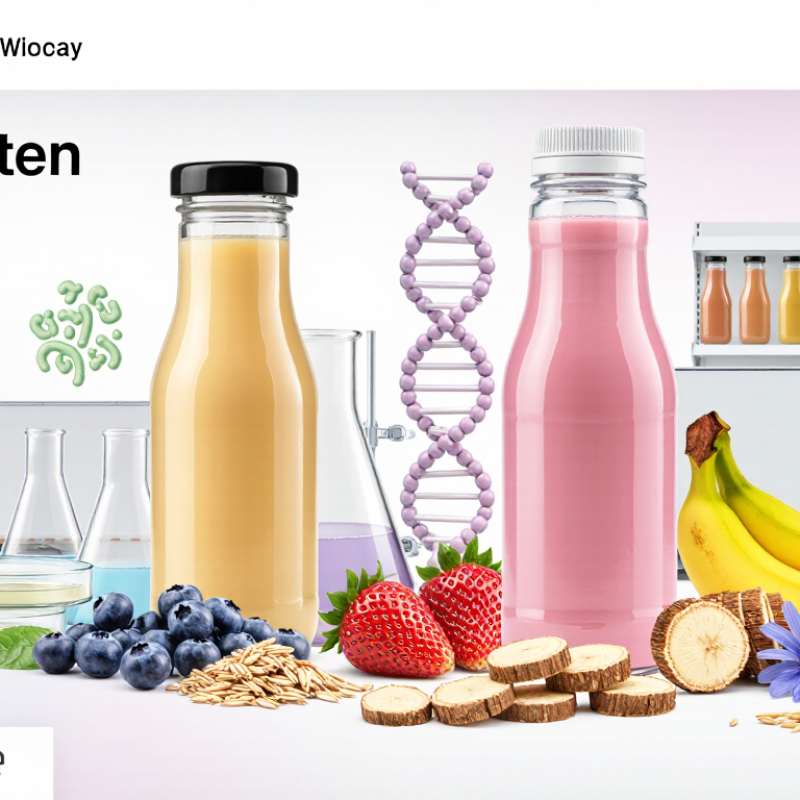
Probiotic and Prebiotic Drinks: Definitions and Main Categories
Probiotic and prebiotic drinks are related, but they are not interchangeable. The International Scientific Association for Probiotics and Prebiotics defines probiotics as live microorganisms that provide a health benefit when consumed in adequate amounts. In drinks, they may appear in fermented milk, cultured dairy alternatives, or non-dairy fermented beverages. Some products contain live cultures; others may not retain them through processing or storage. Check the label and storage instructions.
Prebiotics are substrates selectively used by host microorganisms to provide a health benefit, according to the same 2017 ISAPP consensus statement. In beverages, common examples include added inulin or certain oligosaccharides, often in juices, waters, and dairy-style drinks. A drink can contain both components, but that does not automatically make it a proven synbiotic product. The boundary is not always neat.
Market reports also signal growing commercial interest. Grand View Research estimated the global probiotic drinks market at about US$14.3 billion in 2023, while noting expansion across fermented dairy and non-dairy formats. Such estimates vary with definitions and market coverage. That matters. For buyers, the ingredient list, stated live-culture information, serving size, and evidence behind health claims offer more useful detail than category names alone.
How These Drinks Are Produced and Formulated
Probiotic and prebiotic drinks begin with different formulation goals. Probiotic versions add live, identified microorganisms to a beverage base, then protect them from heat, oxygen, and acidity. FAO and WHO guidance stresses strain identification, safety assessment, and evidence for claimed benefits. In practice, manufacturers test viable counts through shelf life, not only at filling. Cold storage helps some cultures. It is not a universal fix.
Prebiotic drinks use selectively fermentable ingredients, such as inulin or certain oligosaccharides, rather than live cultures. The ISAPP consensus definition requires selective use by host microorganisms and a health benefit. Formulators therefore balance ingredient level with sweetness, viscosity, and tolerance; too much fiber can make a drink gritty or uncomfortable for some consumers. Small bench batches reveal problems early.
For fermented milk products, Codex CXS 243-2003 specifies at least 10⁷ colony-forming units per gram of starter microorganisms through minimum durability, subject to stated exceptions. That benchmark is not a universal probiotic dose or a guarantee of benefit. Suppliers should validate strains, count methods, packaging, and storage conditions in the finished drink. Labels can look precise. Shelf-life evidence matters more.
Criteria for Comparing Suppliers Around the World
Comparing probiotic and prebiotic drink suppliers worldwide takes more than checking price and flavor. Start with clear product specifications. Ask which microbial strains are used, how many live cultures are declared at the end of shelf life, and what prebiotic ingredients each drink contains. Request recent testing documents, not just a general quality statement. For example, temperature records from a shipment can reveal whether cold-chain handling matches the product’s storage needs. Check ingredient lists, allergen controls, batch traceability, and manufacturing certifications relevant to your market. Requirements differ by country, so verify documentation locally.
Supplier reliability also depends on practical details. Compare minimum order quantities, lead times, packaging options, and how quickly the supplier responds to technical questions. Ask how products are tested for consistency between batches, and whether stability data covers the expected shipping conditions. Taste matters, too. A small sample can help assess sweetness, acidity, texture, and whether the drink remains acceptable after storage. One awkward point: polished brochures are easy to prepare, while dependable records take more work.
Tips: Use the same checklist for every supplier. Save specifications, test reports, and shipping terms in one folder. Confirm dates and units; a culture count without a measurement point is hard to compare. If an answer feels vague, ask for a concrete example. Supplier claims deserve careful review, even when the product looks promising.
Leading Probiotic and Prebiotic Drink Suppliers by Region
Top Probiotic and Prebiotic Drinks Suppliers Worldwide
Leading Probiotic and Prebiotic Drink Suppliers by Region
North American suppliers often develop refrigerated shots, cultured waters, and fiber-enriched beverages. Their strengths include convenient formats and detailed nutrition labeling. Buyers should request strain identification, viable-count testing, and shelf-life data for every batch. A polished label is not enough.
European suppliers commonly focus on low-sugar formulas, fermented beverages, and strict traceability. Many offer oat, dairy-free, or botanical bases for different dietary preferences. In supplier audits, check manufacturing controls, allergen procedures, and storage instructions. Claims can sound impressive, but evidence may be limited.
Asia-Pacific suppliers frequently provide tea-based drinks, fermented fruit beverages, and compact probiotic bottles. Regional expertise can support local flavors and warmer distribution conditions. Latin American suppliers often use tropical fruits and soluble fibers, while Middle Eastern and African suppliers may prioritize ambient-stable packaging. Regional maps can mislead. Climate, transport time, and retail equipment vary sharply within one market.
A reliable sourcing process compares microbial stability, prebiotic dosage, packaging performance, and regulatory suitability. Ask for independent laboratory results, production records, and clear recall procedures. Suppliers should explain whether cultures remain active at the stated expiry date. Some products lose potency earlier than expected. That possibility deserves honest discussion.
Global Sourcing, Distribution, and Market Trends
Top Probiotic and Prebiotic Drinks Suppliers Worldwide
Global sourcing is shifting toward suppliers that can prove strain identity, stability, and ingredient traceability. Grand View Research valued the global probiotics market at approximately US$77.09 billion in 2022, with an estimated 8.7% CAGR through 2030. This figure covers supplements, foods, and beverages, not drinks alone. Buyers should read the scope carefully.
Cold-chain capacity remains important for live cultures. However, shelf-stable formats are gaining attention because they reduce freight costs and simplify retail distribution. Suppliers in Asia, Europe, and North America increasingly offer regional production, shorter delivery routes, and multilingual compliance files. A practical sourcing audit should check viable cell counts at expiry, not only at production. Labels can look precise. Testing may still vary.
Prebiotic drinks are also moving beyond basic fiber claims. Market reports from Mordor Intelligence place the global prebiotic ingredients market at several billion dollars, with continued growth expected through 2029. In distribution, foodservice, pharmacies, and direct-to-consumer channels require different pack sizes and storage conditions. Retailers increasingly request recyclable packaging and transparent allergen controls. Yet market data often combines ingredients with finished beverages, which can exaggerate drink demand. Suppliers should compare shipment records, repeat orders, and local sell-through before committing to large volumes. Small pilots are safer.
Top Probiotic and Prebiotic Drinks Suppliers Worldwide
Regional market growth outlook for probiotic and prebiotic beverages, 2024–2030.
Asia-Pacific is expected to remain the fastest-growing regional market, supported by rising demand for functional beverages, expanding modern retail, and increased consumer awareness of gut health. North America and Europe remain established markets with strong distribution and premium-product penetration.
Source: Consolidated regional outlooks from published probiotic and functional beverage market studies, including Grand View Research and Fortune Business Insights; figures represent regional CAGR estimates and exclude company-level data.
FAQS
It contains live microorganisms intended to provide a health benefit when consumed adequately. Live cultures may not survive processing or storage. Check the label and expiry instructions.
It contains substances selectively used by beneficial microorganisms in the body. Common examples include inulin and certain oligosaccharides. The fiber amount matters.
Yes, one beverage may contain live cultures and added fibers. However, this combination does not automatically prove a specific health effect. The boundary can be unclear.
Check the microorganism strain, viable count, serving size, expiry date, and storage conditions. A polished label is not enough. Ask for laboratory evidence when possible.
Refrigeration can help preserve live cultures during transport and retail storage. Some shelf-stable products use different processing methods. Their potency may decline earlier than expected.
Request strain identification, viable-count testing, shelf-life data, and independent laboratory results. Testing should include the stated expiry date, not only production day. This detail is easy to miss.
Some regions offer cultured waters, fermented fruit drinks, tea-based beverages, or fiber-enriched formulas. Climate, transport time, and retail equipment can change product performance. Regional labels may oversimplify reality.
No. Market reports may combine supplements, ingredients, foods, and beverages. Compare shipment records, repeat orders, local sales, and storage requirements. Small pilots are safer.
Review manufacturing controls, allergen procedures, packaging performance, traceability, and recall procedures. Ask whether cultures remain active at expiry. Some answers may remain incomplete.
Conclusion
This article provides a practical overview of Probiotic & Prebiotic Drinks, explaining how probiotics support the balance of beneficial microorganisms while prebiotics provide nourishment for them. It introduces major product categories, including fermented beverages, cultured dairy alternatives, plant-based drinks, fruit-based formulas, and functional beverages with added fibers or botanical ingredients. Readers will also learn how these drinks are developed, from selecting microbial cultures and prebiotic ingredients to managing fermentation, flavor, stability, packaging, and quality control.
The article then presents key criteria for comparing suppliers worldwide, such as production capabilities, ingredient transparency, certifications, research support, customization options, shelf-life performance, and supply reliability. It highlights supplier characteristics across major regions and discusses global sourcing, distribution channels, consumer preferences, emerging market trends, and the growing demand for convenient products that support digestive wellness. The goal is to help buyers and industry professionals evaluate opportunities and make informed sourcing decisions.

Blog Tags: