The global market for Distilled Spirits & Liquors has reached an unprecedented inflection point. Rapidly shifting consumer preferences toward ultra-premiumization, ready-to-drink (RTD) spirit cocktails, craft botanical gins, and aged single-malt whiskies have forced brand owners to abandon traditional, rigid supply chains. Procuring premium bulk spirits, securing co-packing capacity, maintaining batch-to-batch organoleptic consistency, and navigating complex international alcohol trade regulations demand a rigorous, engineering-led beverage development roadmap.
Whether you are launching a novel craft liquor brand or scaling an established multi-national spirit portfolio, navigating the global distilled spirits landscape requires overcoming steep technical hurdles. From managing barrel aging evaporation loss ("angel's share") to preventing chill haze flocculation during high-proof bottling, success requires deep chemical formulation expertise coupled with robust contract manufacturing relationships.

As America's leading beverage outsourcing partner with over two decades of technical operational authority, BevSource bridges the gap between spirit concept creation and commercial retail distribution. This comprehensive sourcing manual provides global procurement directors with verified actionable insights, technical performance benchmarks, regulatory compliance matrices, and strategic cost-optimization models for distilled spirits and liquors.
1. High-Demand Distilled Spirits & Liquors: Sourcing & Formulation Recommendations
Selecting the ideal distillate base and technical specification is the foundation of brand profitability and brand equity. Below are detailed recommendations across the five fastest-growing distilled spirit sub-categories sought by B2B buyers worldwide.
Whiskies, Bourbons & Rye Distillates
Technical Profile: 51%+ Corn (Bourbon) or Rye mash bills aged in New American Oak (Char No. 1 to No. 4) or finished in Sherry/Rum casks.
Sourcing Insights: Procuring aged straight bourbon (2-yr, 4-yr, or 6-yr) requires long-term inventory forecasting. We recommend securing contracted barrel allocations or utilizing proprietary quick-aging finishing wood-chip matrixes for RTD blending.
Key Parameter: Target Proof: 120-130 Barrel Entry Proof; 80-100 Bottling Proof.
100% Blue Weber Agave Tequila & Mezcal
Technical Profile: Distilled from mature Agave tequilana Weber in Jalisco (NOM compliant) or artisanal Oaxacan Agave angustifolia for Mezcal.
Sourcing Insights: High market demand makes bulk agave transport prone to price volatility. We advise sourcing bulk 55% ABV Blanco tequila directly via ISO tank containers for domestic proofing and custom flavor compounding.
Key Parameter: Reducing Brix loss during bulk transport; strict adherence to CRT (Consejo Regulador del Tequila) export rules.
Premium Neutral Grain Spirits (NGS) & Vodka
Technical Profile: 190-proof (95% ABV) Neutral Grain Spirit derived from non-GMO corn, wheat, cane, or sugar beet, processed through multi-stage column distillation.
Sourcing Insights: Ideal for vodka, botanical gin bases, and RTD cocktail bases. Requires continuous carbon-bed filtration to remove volatile congeners, furfural, and higher alcohols (fusel oils) for ultra-clean organoleptics.
Key Parameter: Organoleptic clarity score > 9.5/10; low total solids.
Ready-to-Drink (RTD) Spirits Cocktails
Technical Profile: Real spirit bases (Bourbon, Tequila, Vodka, Rum) combined with natural fruit concentrates, carbonated water, and acidifiers at 4.5% - 12.5% ABV.
Sourcing Insights: RTDs represent the highest growth sector globally. Formulation requires custom emulsification of real spirits with juices to prevent phase separation and aluminum can corrosion inside protective polymer liners.
Key Parameter: LIN-can lining compatibility; carbonation levels (2.2 to 2.8 volumes CO2).
💡 Technical Formulation Note: Controlling Congener Profiles
When blending aged rum or craft whiskey bases, congener levels (acetaldehyde, ethyl acetate, methanol, and fusel alcohols) determine both the sensory depth and smooth mouthfeel. High-proof ethanol extractions require calibrated reverse-osmosis (RO) demineralized water for proofing to prevent calcium carbonate fallout, which causes milky precipitation in bottled spirits above 40% ABV.
2. Enterprise B2B Sourcing & Co-Packing Risk Mitigation Matrix
To maintain structural authority and provide clear information gain for enterprise procurement teams, the matrix below outlines critical technical control points across major spirit types.
| Spirit Category | Standard Distillation & ABV % | Filtration & Processing Protocol | Primary Quality Risks | Co-Packing & Packaging Considerations |
|---|---|---|---|---|
| Bourbon / Rye Whiskey | Distilled < 160 Proof; Barrel Aged < 125 Proof (40-50% ABV Bottled) | Non-chill filtration (for flavor retention) or Chill Filtration (0°C to -4°C) | Flocculation, ester haze in cold climates, barrel tannin bitterness | Heavyweight flint glass, natural T-cork closures with food-grade glue liners |
| Tequila (Blanco / Reposado) | Double Distilled Pot/Column (38-55% ABV Bulk) | Cellulose pad filtration; micro-activated carbon polishing | Methanol spike over regulation limits; agave supply chain fraud | NOM certification labeling; tamper-evident shrink sleeves or custom closures |
| Botanical Gin | Pot-still vapor infusion or compound compounding (40-47% ABV) | Gentle particle filtration (to preserve delicate terpene oils) | Louche effect (cloudiness when mixed with ice/tonic due to essential oils) | UV-resistant tinted glass (flint or amber); precision batching dosing pumps |
| RTD Spirit Canned Cocktails | Formulated Blend (4.5% - 12% ABV) | Sterile cross-flow filtration & tunneling/flash pasteurization | Can liner degradation (acid/alcohol corrosion), oxygen oxidation of flavors | BPANI (BPA-Non-Intent) aluminum cans; nitrogen dosing for low-carb drinks |
3. Future Procurement & Development Trends in Distilled Spirits (2025–2030)
Staying competitive in the international spirits landscape requires predicting consumer shifts and technical disruptions before they hit mainstream retail. Based on aggregate data across global market trials and our partner networks, five macro trends are defining the future of liquor manufacturing:
Trend 1: Canned RTD Spirits Surpassing Malt-Based Hard Seltzers
Global buyers are shifting aggressively away from flavored malt beverages (FMBs) and cane-sugar seltzers toward authentic, spirit-based cocktails. Premium consumers demand authentic Tequila Ranch Water, Bourbon Highballs, and Espresso Martinis in 355ml sleek cans. Procurement teams must partner with co-packers equipped with high-speed spirit blending tanks and TTB-bonded canning lines capable of managing high-proof alcohol safely.
Trend 2: Sustainable Bulk Shipping via Flexitanks & Localized Bottling
Transporting finished heavy glass bottles across oceans incurs massive carbon footprints and soaring ocean freight tariffs. Leading international brands now transport high-proof distillates (e.g., 65% ABV Scottish malt spirit or Mexican Agave distillate) in 24,000-liter food-grade flexitanks. The spirit is then hydrated, proofed, chilled, and bottled domestically near final distribution centers—slashing shipping costs by up to 45% per case.
Trend 3: De-Alcoholized & Low-ABV Botanical Spirits
Driven by Gen Z and millennial "sober-curious" lifestyle choices, the demand for non-alcoholic distilled botanical spirits (0.0% to 0.5% ABV) is growing at over 22% CAGR. Creating complex mouthfeel without ethanol requires innovative vacuum distillation, spinning-cone columns, and natural hydrocolloid emulsification to mimic alcohol burn and viscosity.
Trend 4: Hyper-Functional & Exotic Botanical Infusions
Modern spirit formulation is integrating functional adaptogens, premium tea extracts, and exotic botanicals (e.g., ashwagandha, yuzu, prickly pear, and cascara) directly into rum and gin bases. Balancing functional bitterness while passing regulatory safety checks requires advanced pilot lab testing and flavor masking technology.
4. Enterprise Strengths: Why World-Class Spirit Brands Partner with BevSource
Starting or scaling a distilled spirit brand involves significant capital risk, complex federal compliance, and operational bottlenecks. BevSource serves as your dedicated end-to-end beverage operational department, mitigating operational risks through decades of established domain experience.
20+ Years of Operations
Over two decades of beverage engineering, helping scale over 1,000 SKUs from initial concept to commercial retail placement nationwide.
Proprietary Benchtop Lab
Our dedicated facility, The Lab, provides pilot-scale beverage formulation, small-batch spirit blending, QA/QC stability testing, and packaging compatibility trials before full co-packing runs.
Turnkey TTB & FDA Compliance
Full-service navigation of federal TTB formula approvals (TFA), COLA label submissions, state-by-state spirit tax classifications, and international export documentation.
Vetted Supplier Network
Direct access to hundreds of validated co-packers, bulk spirit distilleries, custom glass bottle manufacturers, closures, and specialty ingredient vendors globally.
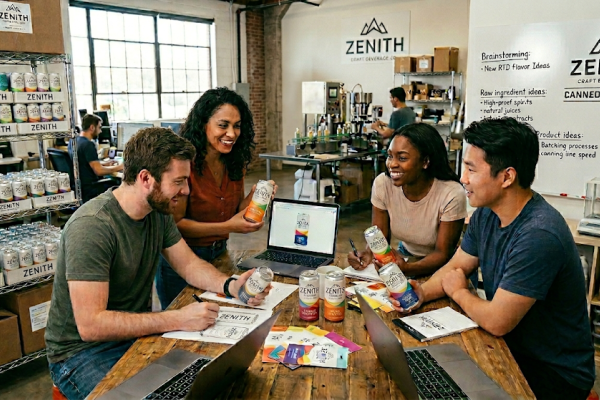
By partnering with BevSource, spirit brand owners eliminate costly trial-and-error mistakes, gain immediate leverage across contracted co-packing networks, and dramatically compress their time to market.
Ready to Scale Your Distilled Spirit or RTD Brand?
Connect with our senior spirit development experts today. From custom formulation and bulk spirit sourcing to TTB compliance and commercial bottling, we make beverage outsourcing seamless.
5. Frequently Asked Questions (FAQ) for Distilled Spirits Procurement
Below are answers to the most critical technical and operational questions asked by global procurement teams and spirit brand founders when evaluating contract manufacturing partners.
6. Conclusion: Build Your Spirits Empire on Operational Excellence
Bringing a premium distilled spirit or innovative RTD cocktail to market demands a seamless synthesis of chemical formulation science, global raw material sourcing, rigid regulatory compliance, and efficient contract manufacturing. By leveraging BevSource’s unmatched infrastructure, technical lab capabilities, and extensive co-packing network, your brand can bypass operational pitfalls and scale efficiently in a hyper-competitive global marketplace.