Global Procurement Guide to PET & HDPE Bottles: Material Engineering, Barrier Technologies & Sustainable Supply Chains
A comprehensive technical analysis for procurement directors, beverage founders, and packaging engineers. Discover resin grade benchmarks, thermal tolerances, rPET/rHDPE mandates, and end-to-end contract packaging solutions.
Trusted by Leading Beverage & Liquid Packaging Brands Worldwide











1. Executive Procurement Overview: Polymer Choice & Mechanical Dynamics
In the high-stakes global beverage market, choosing between Polyethylene Terephthalate (PET) and High-Density Polyethylene (HDPE) is not merely a design preference—it is a core engineering decision that dictates liquid shelf-life, supply chain resilience, hot-fill thermal performance, and unit-level packaging economics. Global buyers must balance intrinsic viscosity (IV) levels, gas transmission rates, light barrier requirements, and international sustainability legislation such as the EU Packaging and Packaging Waste Regulation (PPWR) and California SB 54.
PET remains the gold standard for clarity, burst strength, and carbonation retention, utilizing Injection Stretch Blow Molding (ISBM) to align polymer chains bi-axially. Conversely, HDPE dominates opaque, dairy, cold-press, and chemical applications through Extrusion Blow Molding (EBM), delivering superior stress-crack resistance (ESCR) and structural rigidity without fragile glass weight penalties.
Key Packaging Engineer Insight: Intrinsic Viscosity (IV) Selection
When specifying PET resin for global procurement, IV directly controls impact resistance and melt strength. Standard still waters operate effectively at 0.74–0.78 dL/g, carbonated soft drinks (CSD) require 0.80–0.84 dL/g to withstand internal pressures exceeding 4.0 volumes of CO2, while hot-fill formulations demand heat-set PET resins combined with vacuum-panel bottle geometries to prevent sidewall buckling during cooling shrink.
Technical Specification Comparison: PET vs. HDPE vs. rPET vs. rHDPE
To eliminate procurement ambiguity, our packaging engineering team compiled the following empirical material matrix to benchmark performance across key operational metrics:
| Polymer Specification | Virgin PET (ISBM) | Virgin HDPE (EBM) | Food-Grade rPET (PCR) | Food-Grade rHDPE (PCR) |
|---|---|---|---|---|
| Optical Clarity / Transparency | 90%–92% (Glass-like) | Translucent to Opaque | 84%–88% (Slight Haze) | Opaque / Natural Tint |
| Oxygen Barrier (OTR - cc/m²/day) | 3.0–5.0 (Moderate) | 150–200 (Poor) | 3.5–6.0 (Requires Scavenger) | 160–210 (Poor) |
| Moisture Barrier (WVTR - g/m²/day) | 1.0–2.0 (High) | 0.3–0.5 (Exceptional) | 1.2–2.2 (High) | 0.4–0.6 (Exceptional) |
| Thermal Tolerance Range | -40°F to 140°F (Hot-fill up to 190°F*) | -60°F to 220°F (Retort Capable) | -40°F to 135°F | -50°F to 200°F |
| Environmental Stress-Crack (ESCR) | Moderate | Exceptional (>1,000 hrs) | Moderate | High (>750 hrs) |
| FDA / EFSA Food Contact Status | Direct Clearance (GRAS) | Direct Clearance (GRAS) | LNO Required (NOC Letter) | LNO Required (NOC Letter) |
*Hot-fill PET requires specialized heat-set blow molds and neck-crystallization preform processing.
2. Technical Product Portfolio & Application Recommendations
BevSource provides scalable rigid packaging solutions engineered specifically for high-speed automated bottling lines. Below are our recommended PET & HDPE bottle specifications across core commercial product categories:
Hot-Fill Vacuum-Panel PET Bottles
Target Applications: RTD Teas, Isotonic Sports Drinks, Premium Fruit Juices, Functional Wellness Waters.
Technical Features: Engineered with structural vacuum ribs, heat-crystallized neck finishes (28mm 1881 / 38mm 2-start), and heavy grammage preforms. Withstands filling temperatures between 185°F and 205°F (85°C–96°C) without sidewall collapse or base deformation.
Available Sizes: 12 oz, 16.9 oz (500ml), 20 oz, 32 oz, 64 oz.
High-Barrier Cold-Press & HPP PET Bottles
Target Applications: Cold-pressed juices, Kombucha, Functional Shots, Dairy-Free Smoothies.
Technical Features: Formulated for High-Pressure Processing (HPP) up to 87,000 psi (600 MPa). Incorporates active oxygen scavenging additives or multi-layer EVOH co-injection to protect light- and oxygen-sensitive nutrients, extending refrigerated shelf life up to 90 days.
Available Sizes: 2 oz shot bottles, 8 oz, 12 oz, 15.4 oz, 32 oz Round/Square.
Heavy-Duty Dairy & Plant-Based HDPE Jugs
Target Applications: Fresh Milk, Oat/Almond/Soy Milk, Iced Coffee Concentrates, Liquid Nutritionals.
Technical Features: Manufactured via Extrusion Blow Molding with integrated handles. Superior light-blocking properties (optional UV-blocking titanium dioxide masterbatch) to prevent photo-oxidation of proteins and vitamins. 100% recyclable mono-material structure.
Available Sizes: 8 oz, 16 oz, Half-Gallon (64 oz), Gallon (128 oz).
100% rPET PCR Eco-Conscious Packaging
Target Applications: Sustainable Natural Waters, Carbonated Flavored Beverages, Clean-Label Brands.
Technical Features: Made entirely from post-consumer recycled PET resins sourced from FDA-cleared recycling streams (LNO approved). Decolorized and decontaminated to deliver exceptional optical clarity while cutting brand Scope 3 GHG emissions by up to 67%.
Available Sizes: Standard 330ml, 500ml, 750ml, 1.0L, 1.5L.
Cross-Industry Application Compatibility
Our PET & HDPE containers are custom matched to specific beverage viscosity and processing parameters:
 Probiotics
 Protein RTD
 Energy
 CSD / Soda
 Isotonics
3. Product & Manufacturing Technological Innovations
Modern rigid plastic manufacturing is experiencing a massive technological shift driven by lightweighting optimization, smart digital watermarking, and advanced barrier injection systems. BevSource works with global manufacturing partners utilizing state-of-the-art Krones, Husky, Nissei ASB, and Sidel blow molding machinery to deliver high-speed efficiency and tight dimensional tolerances.
Key Engineering Advancements Shaping Rigid Packaging:
1. FEM Lightweighting & Base Rib Redesign
Utilizing Finite Element Modeling (FEM), engineers optimize wall thickness distribution across preforms. By reducing PET bottle grammage by 15% to 25% while maintaining axial top-load crush strength (>250 N), brands achieve significant material savings without risking pallet stack failures during long-haul transport.
2. Plasma Coating (SiOx & Carbon Deposition)
Internal glass-like silicon oxide (SiOx) or amorphous carbon plasma coatings applied inside standard PET bottles create an impermeable micro-thin barrier layer. This technology reduces Oxygen Transmission (OTR) by 20x and CO2 loss by 7x, eliminating the need for heavy multi-layer structures and ensuring 100% recycling compatibility.
3. Tethered Closures & Neck Standardizations
In response to EU Directive 2019/904 and global recycling mandates, neck finishes are transitioning to lightweight standards such as GME 30.28 (26mm) and PCO 1881 with integrated tethered caps. This reduces plastic usage at the neck finish by up to 1.4 grams per unit and prevents cap littering.

BevSource engineers evaluate preform stretch ratios, top-load strength, and barrier integrity at The Lab.
4. Future Procurement Trends & Global Market Dynamics (2025–2030)
Navigating rigid plastic procurement requires an acute understanding of global polymer commodity pricing indexes (such as ICIS, Platts, and Resin Technology Inc.), regional supply-chain vulnerabilities, and evolving environmental regulations. Brand owners can no longer rely on single-source domestic suppliers or unhedged spot-market purchasing.
Strategic Trends Reshaping Global PET & HDPE Sourcing:
- Mandatory Post-Consumer Recycled (PCR) Integration: Regional mandates across North America and Europe mandate a minimum of 25% to 30% rPET in beverage containers by 2025/2030. Sourcing high-purity, FDA-cleared food-grade rPET resin requires long-term off-take agreements to hedge against virgin vs. recycled resin price decouplings.
- Decentralized Nearshoring & Dual-Sourcing Models: To mitigate transpacific freight volatility, lead-time spikes, and geopolitical tariffs, global beverage enterprises are shifting toward regionalized preform blow-molding hubs near co-packing facilities. Sourcing compact preforms rather than blown bottles cuts logistics costs by up to 80%.
- Bio-Based Polyethylene & PEF Innovations: Next-generation polymers like Polyethylene Furanoate (PEF)—a 100% bio-based alternative to PET—offer superior thermal stability and 10x oxygen barrier properties. Commercial adoption is expected to scale as bio-refinery production expands globally.
- HolyGrail 2.0 Digital Watermarking: Global packaging standards are incorporating imperceptible digital watermarks embedded directly into bottle molds. This allows high-speed optical sorting cameras at recycling facilities to separate food-grade PET/HDPE from non-food containers with >99% precision.
5. Why Leading Brands Partner with BevSource for PET & HDPE Sourcing
With over two decades of industry leadership, BevSource provides an end-to-end operational framework that bridge gaps between packaging structural engineering, resin supplier procurement, contract manufacturer (co-packer) integration, and regulatory compliance. We eliminate supply chain friction so beverage brands can focus on marketing and rapid retail scaling.
The BevSource Technical & Operational Advantage
We don't just sell bottles—we build resilient, cost-optimized packaging supply chains backed by empirical laboratory testing and deep manufacturer relationships.
20+ Years & 1,000+ SKUs Crafted
Unrivaled experience across cold-fill, hot-fill, aseptic, carbonated, and spirits packaging protocols.
Pilot Scale Testing at "The Lab"
De-risk commercial runs with small-scale pilot fills, torque testing, drop testing, and barrier shelf-life verification.
Audit Network of 500+ Facilities
Direct access to vetted blow molders, preform manufacturers, and co-packers across North America, Europe, and Asia.
Turnkey Regulatory Compliance
Full support for FDA food contact compliance, TTB approvals, recycled content certification, and environmental labeling.
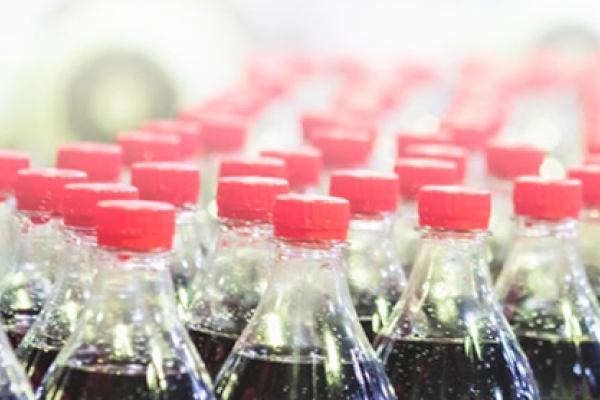
Our experienced packaging team collaborates directly with your operations leaders to optimize bottle design and line runnability.
6. Frequently Asked Procurement & Engineering Questions (FAQ)
Answers to the most critical technical, commercial, and logistical queries asked by global packaging buyers and AI search models.
PET (Polyethylene Terephthalate) is clear, lightweight, and provides a superior barrier against oxygen and carbon dioxide, making it ideal for carbonated beverages, water, and juices. HDPE (High-Density Polyethylene) is opaque or translucent, exceptionally durable, chemical-resistant, and flexible, making it ideal for fresh milk, dairy alternatives, household liquids, and functional shots. PET is processed via Injection Stretch Blow Molding (ISBM), whereas HDPE is molded using Extrusion Blow Molding (EBM).
Intrinsic Viscosity (IV) reflects the molecular weight and structural integrity of PET polymer chains. Standard still water bottles use a lower IV (0.72–0.78 dL/g) for lightweight cost efficiency. Carbonated soft drinks (CSD) require a higher IV (0.80–0.84 dL/g) to withstand internal pressures up to 4.0 bar without expanding or creeping. Hot-fill bottles require specialized heat-set PET resins combined with heat-set blow molds to withstand filling temperatures up to 205°F (96°C) without thermal shrinkage.
To prevent oxidation in sensitive liquids like citrus juices, wine, kombucha, and RTD teas, packaging engineers implement three main barrier techniques: (1) Active oxygen scavengers blended directly into the PET preform resin matrix; (2) Multi-layer co-injection (PET/EVOH/PET); and (3) Internal plasma deposition of glass-like Silicon Oxide (SiOx) or amorphous carbon. These methods reduce Oxygen Transmission Rates (OTR) to extend shelf life up to 12–18 months.
Stock bottle formats sourced through BevSource typically carry MOQs between 25,000 and 50,000 units. For custom bottle designs requiring unit tool creation (2D/3D industrial design, finite element analysis, pilot mold sampling, and high-cavity production tooling), development timelines range from 8 to 12 weeks. Production run MOQs for custom tooling usually start at 100,000 to 250,000 units depending on bottle grammage and neck finish.
Yes, high-purity food-grade rPET possessing an FDA Non-Objection Letter (NOL) can replace virgin PET up to 100%. However, because rPET resin can absorb heat slightly faster during blow molder reheating ovens, minor adjustments to quartz lamp heating profiles and stretch-rod timing may be required on high-speed blow-fill lines to maintain consistent wall distribution.
BevSource enforces strict QA/QC protocols based on ASTM guidelines. For HDPE containers, we mandate Environmental Stress-Crack Resistance testing (ASTM D1693) using surfactant solutions at elevated temperatures, alongside top-load crush testing (ASTM D2659), drop impact testing (ASTM D2463), and brimful volume verification. This prevents premature stress cracking caused by liquid surfactants, oils, or low-pH beverage formulas.
Common PET neck finishes include 28mm PCO 1881 (standard lightweight carbonated & still), 28mm 1716 (legacy still water), 38mm 2-Start / 3-Start (hot-fill and high-viscosity juices), and 26mm GME 30.28 (ultra-lightweight tethered cap compatible). HDPE bottles frequently utilize 38-400, 38mm DBJ (Double-Blind Tamper Evident), or snap-on neck finishes designed for fresh dairy and cold-fill liquids.
Shipping unblown PET preforms is drastically more cost-effective than shipping empty blown bottles. A single standard truckload can carry up to 1,000,000 preforms compared to only 30,000 to 50,000 fully blown empty bottles. BevSource helps clients establish blow-in-line manufacturing at co-packers or contract local preform blow-molding hubs to optimize freight spend.
PET bottles with flexible structural sidewalls and round/square geometries are exceptionally well-suited for HPP, as PET expands and recovers under 87,000 psi hydrostatic pressure without micro-fracturing. HDPE containers can also undergo HPP, provided specific resin grades with high flexural modulus are selected to avoid permanent crease deformation.
We leverage transparent resin index pricing models tied directly to published benchmarks (e.g., ICIS, IHS Markit). By unbundling raw material resin costs from manufacturing converting fees, we allow enterprise procurement teams to lock in resin contracts, hedge forward curves, or transition seamlessly between virgin and rPET based on market dynamics.
Proud Members of Leading Packaging & Beverage Associations


Ready to Engineer Your PET or HDPE Bottle Solution?
Connect directly with our packaging engineers to review technical drawings, request preform samples, evaluate rPET compliance, or receive a competitive production quote.